Category Archives: Woman With Landscape

PINK GRAPEFRUIT MARMALADE
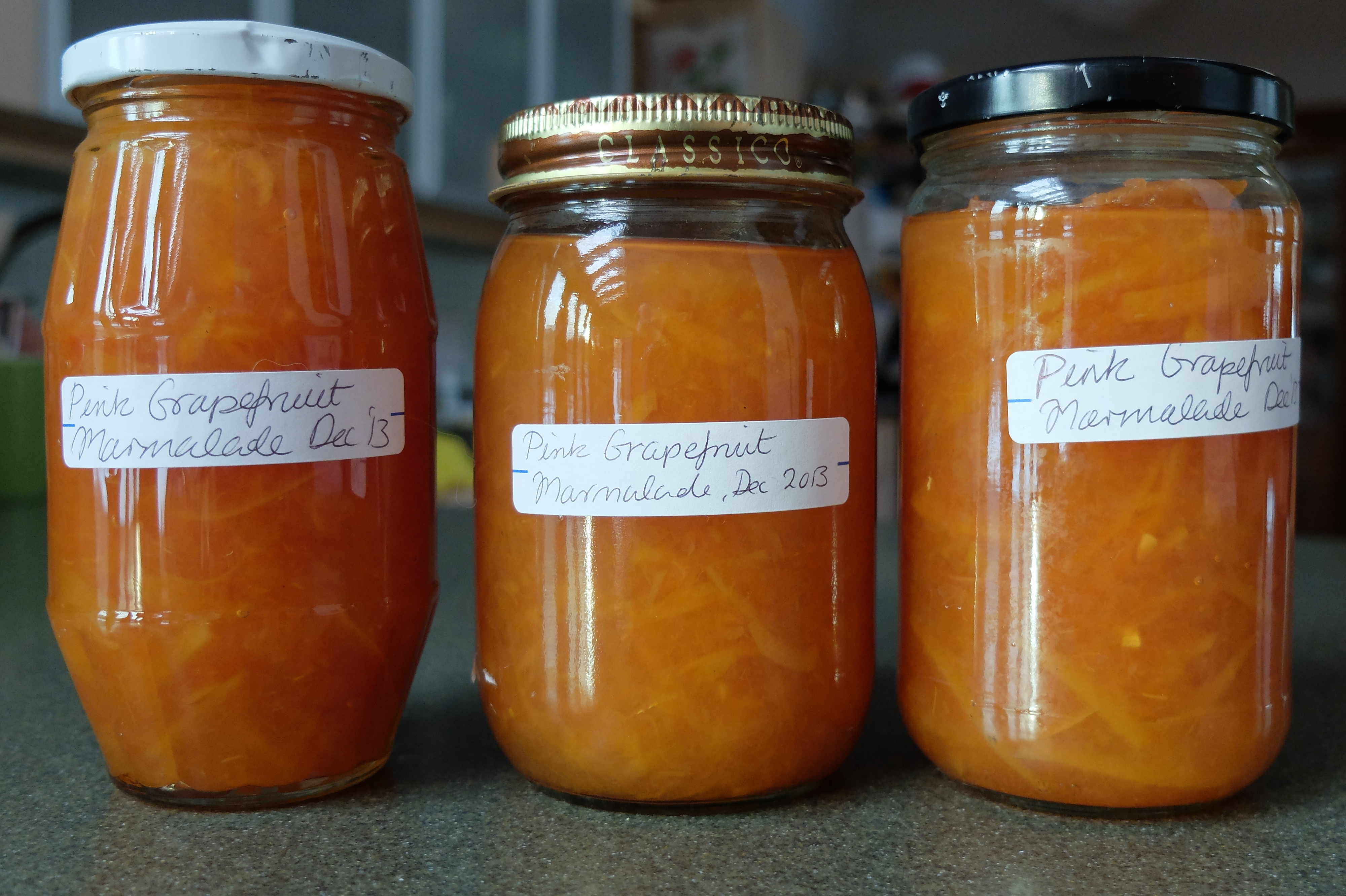
PINK GRAPEFRUIT MARMALADE

 DSCF2916

My comfort food is toast, specifically, toast with butter and marmalade. Not just any old butter—rich, creamy, Irish butter, and not just any old marmalade—Seville orange marmalade, preferably homemade.

When I first came to live in America, not surprisingly, I left this comfort food far behind. Your basic loaf of supermarket bread had the consistency of a piece of sponge and was cloyingly sweet. The butter was pale and anemic. And marmalade—what marmalade?

It didn’t take me long to figure out the bread thing. In New York there are any number of great bakeries. Butter, well I could always splurge on those very expensive imports of Kerrygold, and then ration the bejaysus out of it. Or resort to stashing it in my luggage on trips home, hoping airport sniffer dogs didn’t have a taste for butter. But the marmalade proved elusive. Grape jelly was not an option. The only solution was to make my own.

Though a decent marmalade was as rare as hen’s teeth, finding a bitter Seville orange (preInternet-ordering days) in New York was nigh impossible. I was going to have to improvise. Move over Seville oranges. Cue the pink (or red) grapefruit.

All that was many moons ago. Now, each year around December, I keep my eyes open for the fresh crop of Florida grapefruit to hit the stores. Luckily this coincides with the holidays, because I’ve discovered that I’m not the only one who likes pink grapefruit marmalade. I always make two or three batches, knowing I’ll give much away as gifts. The rest sit in my pantry to sustain me year long.

Yes, it’s an afternoon’s work, but shockingly simple to make (oops, let the cat out of the bag on that one). So if you’re in the mood to try something new, here’s my recipe. Warning, it can become addictive.

MELISSA’S PINK GRAPEFRUIT MARMALADE

Pink Grapefruit, preferably organic

Sugar*

¼ cup of water

 *Most jam recipes call for a 1:1 ratio of fruit to sugar.

I use 2:1, but this is a personal taste thing.

Equipment: Sharp knife, it helps if you have a food processor with a grating attachment, but not essential. Scissors. Two large pots. Several glass jars (I use recycled, but you can go buy fancy canning jars if it tickles your fancy). Tongs.

This can get messy, so roll up your sleeves and put on your apron.

  1. Put your jars and lids on to boil in one of the pots.
  2. Scrub the mother out of those grapefruit in warm, soapy water.
  3. Slice them around the middle and pop out any large seeds.
  4. By hand, squeeze some of the juice out of the fruit into cooking pot.
  5. Snip the pith core out of each grapefruit half.
  6. Grate at least half the squeezed halves with the food processor.
  7. Hand cut the other half. Everyone has their own preference for rind thickness.
  8. Plop everything into the cooking pot & add your sugar & water.
  9. Bring to a rolling boil, then let simmer for at least ½ an hour, stirring occasionally. Then it’s up to you. I prefer my marmalade slightly runny and a golden amber color. If you prefer a stickier consistency cook a little longer, but don’t overdue it or you’ll get scorched, grapefruit flavored glue.
  10. While hot, ladle into glass jars & put full jars back into canning pot and bring back up to a boil for about ten minutes. This will seal the lids. Take out and let cool. Often you’ll hear the lids popping as they cool, letting you know the seal is good.

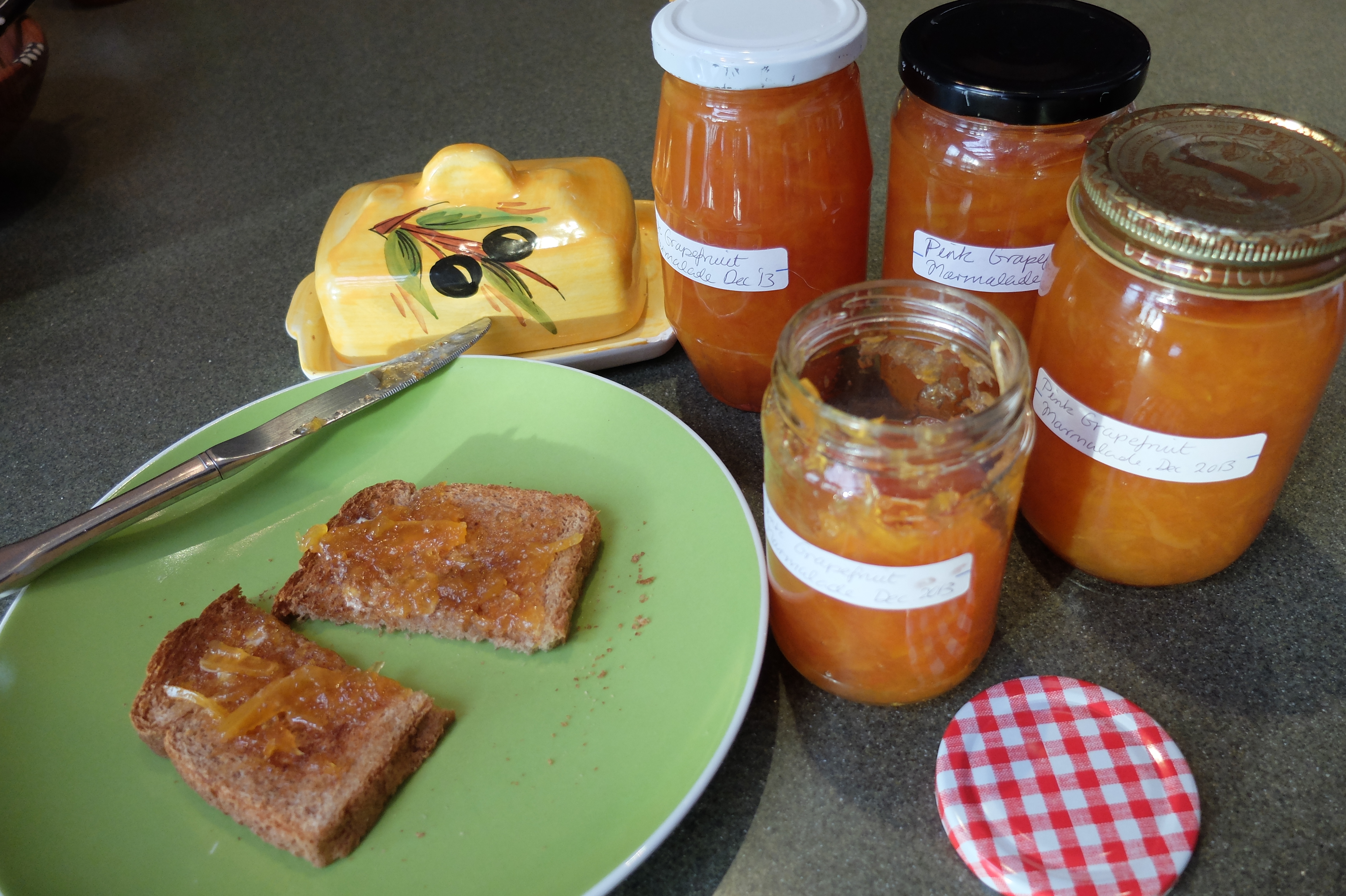
Serve on toast—where else.

Also delicious on crackers with cheese, good for glazing hams, and surprisingly tasty as a chutney-like side with sausages.
DSCF2922

If you try this, I’d love to know how you get on, and I’m happy to answer any questions.

Slainté


SNOW–LOVE IT OR HATE IT?

IMG_3230It’s that time of year again; my halls are decked with dripping snow boots, pants, hats, and mittens. We’ve been frolicking in the fluffy stuff, building forts, packing snowballs, snapping snow scenes for holiday cards.

First out the door on a snow day is Dahlia, our resident snow cat. Ever since she was a kitten she’s loved the snow. Her mother, on the other hand, is happy to sit on the doorstep, soaking up the rays, but not setting paw anywhere near that disgusting cold, wet, white stuff. IMG_7319

Love it or hate it, we all fall somewhere on the snow spectrum. As a child I was way over to the left, under radically obsessed. The fact that we rarely ever got more than a mushy millimeter of snow in Ireland may have had something to do with it. Even a good frost classified as a “snowy” day. And then one year we got the mother of all snowfalls. It snowed for twenty-four hours straight, and by the end of it, the country was in total lock down, which lasted for weeks. I remember walking along snow banks with the tops of hedges poking out, and coming across cars buried in snow caves at the side of the road. My toddler brother owes his continued existence to his red snow suit. But for that, we’d have lost him, sunk up to his little uxters in a snowdrift. Needless to say, I was in heaven. IMG_2134

Now, living in the Northeast US, we get at least one good footer of a storm a year, and sometimes more. When the local forecasters go into hyperbolic mode about the massive storm barreling our way, I still feel that tingle of excitement. And even if I don’t always want to run out and make snow angels, I delight in the transformed landscape, and drink in the sharp tang of snowy air. IMG_0999

I believe I inherited my love of snow from my father. He never failed to get excited about a flake of snow, and often, when I call him up and tell him of our latest snowfall, he’ll express deep envy. My mother—not so much. She falls on the other end of the spectrum. Happy to look at a pristine landscape through a window, while snuggled up with a good book and a cup of tea, don’t ask her to step outside.

Where do you fall on the snow spectrum? Love it, hate it, or somewhere in between?

IMG_0296 IMG_3282

PAGAN MOON

DSCF1812The moon is a blank-faced clock
Its ripe orb the only thing
That pagan man in pre-historic times
Could hang his hat on.
The deep chill of winter began the slow
Rumble of the seasons
The waxing and waning
Of the moon
Etching itself into the everyday.
The tug that set the hens to laying
And the shrimp to drift in on a high spring tide.
The high, sharp-edged disk
That lit up the eyes of a fox on the prowl,
Pups nipping at her heels, pouncing on frogs.
The May moon, anticipated by farmer and poet alike—
The moon to wipe the slate clean,
To slap the palm, sealing the deal of a new year’s agreement.
The warm, lazy moon that enticed lovers into the woods,
And small children into achingly cold mountain streams to catch minnows.
The harvest moon
Slipping silently up through half-naked tree branches
Sealing the coffers for another year.
This is the moon to be beguiled by sweet music, honey wine, and blood.
The powerful moon that holds the thread of life.
If she is not fawned over and appeased
She will slowly, with one eye on the clouds,
Unravel the thread.

I wrote this thinking of the early inhabitants of the island of Ireland, but the moon has resonance for every culture. I would love to hear about yours.

DSCF1799

November Morning

DSCF1629Quiet world.
Feathers of frost on glass.
The clack of buttons and zippers in the tumble dryer,
Cat snoring stolidly,
Radiators ticking, keeping the cold at bay.
The lone cricket whose slow trill I pinpointed in the spirea
Has gone silent.
And all those boisterous crows and blue jays
Conducting their business in full-throat yesterday,
Have been subdued.
The ‘possums entrails, spilling in pink coils out of its belly onto the road
Have frozen—frozen dinners for turkey vultures.
Low burnt-sienna sunlight through closed lids and closed window
Is still warm enough to bask in.

DSCF1638

Greek Island Adventure, 5

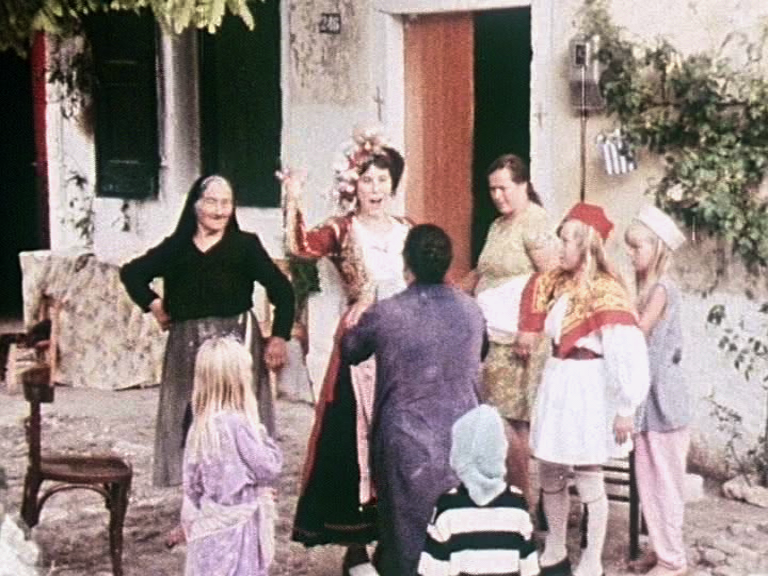
Angeliki putting on her national costume with  Katerina & Yaya's help

Angeliki putting on her national costume with Katerina & Yaya’s help

In 1973 as a seven-year-old child living the idyllic life on the island of Corfu, I was oblivious to the fact that Greece was in turmoil, writhing under the yoke of the Army Junta (1968-74). My father later informed me that our special invitation to visit the Old Citadel for a feast day celebration, and several other rather bizarre invitations, was so that the secret police could keep tabs on us. I can only imagine that in their eyes, a couple of Irish documentary filmmakers with three small children in tow seemed highly subversive.

vlcsnap-2013-10-14-21h32m54s134

On the whole, though, the Corfiots welcomed us with open arms.  vlcsnap-2013-10-14-21h07m43s100


This is how a typical meeting with a stranger would go: Mum and Dad would stop the VW bus on a remote hillside to film a snake Dad had just caught. Out of nowhere, a goat herder or a group of small children would appear. Soon we’d be surrounded by curious faces. And then came the inevitable question. Poú eísai? Where are you from? When we said, Irlandía, initially thrown off by the blonde hair they would say, Ollandía? Ochi, we’d say, No. Irlandía. Their faces would light up in recognition. Their index fingers would go up and invariably they’d go, Boom, boom, boom, imitating the sound of a gun. At the time it was the height of The Troubles in Northern Ireland, with the IRA vehemently resisting the British Government’s occupation, and many in Greece understood that oppression. Immediately, we would become allies. Soon, we learned when asked that question to respond, Irlandía, Boom, boom, boom.

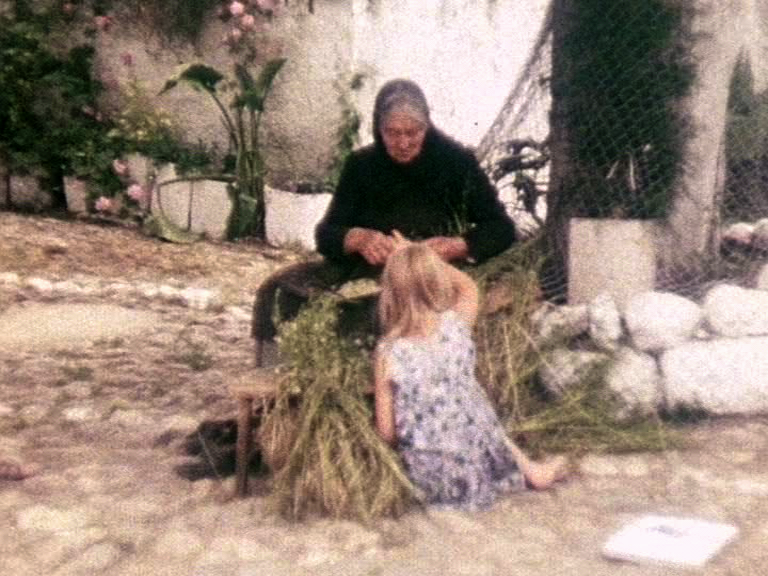
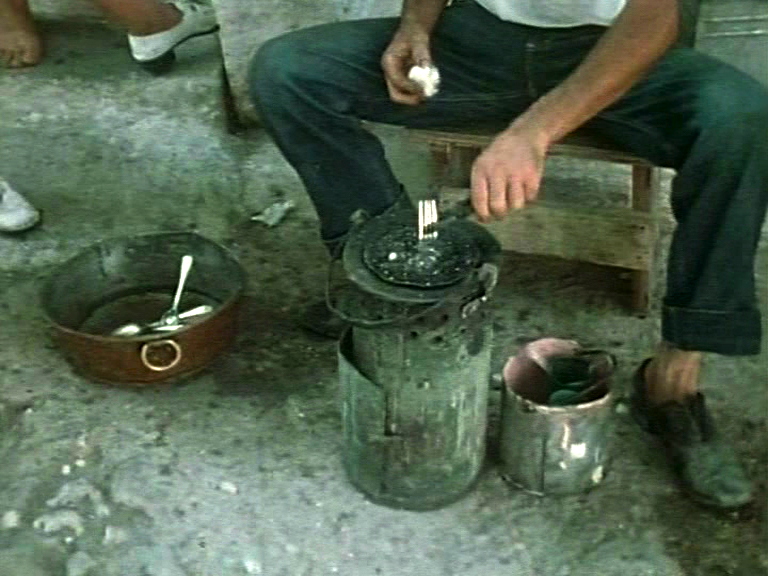
In our village, Junta, or no Junta, people got on with the job of living. And every day there was something new for my sisters and I to marvel at. Traveling trades people often made their way through the narrow streets of Kinopiastes, calling out their services. One of my favorites was the Spoon Man.

vlcsnap-2013-10-14-21h48m34s76At his familiar cry, doors would open and voices would hail him. He’d stop, open up his bag of tricks on the side of the street and a crowd of housewives would gather, bringing their household cutlery wrapped in their aprons. To a small child, the Spoon Man was better than a magician. Carefully holding a tarnished spoon with a pair of tongs, he’d dip it in a blackened, bubbling pot of sludgy, dull silver-hued liquid. A second later the spoon would emerge, gleaming and winking in the sunlight, it’s silver surface restored to glory.

Surely this was alchemy—or at least its little sister. vlcsnap-2013-10-14-21h48m21s165

The traveling peddler, was another of my favorites. Dimitris led his heavily laden donkey, panniers piled high with every imaginable household tool, to our back gate. He’d stop, spread out the choicest selection of combs and headscarves and plastic bowls on a cloth, and wait for customers. Then, sales or no sales, he’d load everything back onto the patient donkey, tie it down securely, and clatter off into the distance, plastic buckets swaying from side to side.vlcsnap-2013-10-14-21h53m33s233

I often wonder how the villagers perceived this Irish family who landed in their midst that spring and summer. They put up with our perpetual curiosity and even seemed to welcome our interest in every aspect of their lives. If my sisters and I ran down to Pappoú’s corner shop to buy a gazoza or some bubble gum, not only would we return with our money still in our pockets, but countless grandmothers sitting on their stoops, or grandfathers flicking worry beads through their fingers would have greeted us. Our friends sought us out, and arm in arm, we paraded around the village until we found some mischief to get into. One day Leni borrowed her mother’s wedding dress and we held an epic Greek wedding in the yard. Another day, Leni and her older sister Angeliki dressed up in their national costumes to give us a show.

vlcsnap-2013-10-14-21h39m10s30 vlcsnap-2013-10-14-21h36m38s63

The nuns who lived up the hill at the back of the village seemed delighted by our visits. Giggling and chattering away like jackdaws, the young nuns immediately pulled out extra chairs and a big bottle of ouzo and the ubiquitous, sticky kumquat liqueur. Thankfully, this was off limits to kids. But my mother would dutifully take tiny sips of the sickly sweet liqueur. They’d crack walnuts from their trees for us, and offer chunks of nougat.

Occasionally, we did run into a cultural misunderstanding. Since a small boy, my father has hand-raised stray or injured animals, particularly birds. The best pet we ever had was a Jackdaw named Percival that Dad helped us hand-rear after it fell out of it’s nest. We hadn’t been living in Greece long before he acquired a young Little Owl. The plan was to keep it long enough to film it, then release it. During the day it slept in the villa, perched on my father’s tripod. At night, it woke up to eat the live mice we’d caught for it and flutter around the house. One day, we came back from a day of filming and the owl was gone. Later, we found its burnt remains in the alleyway at the back of the house. We learnt that in Greece, old superstitions run deep, and a few people still consider them kakó, or evil. Perhaps this dates back to the ancient Roman belief that owls were harbingers of death, or witches could turn themselves into owls. For most in Greece, though, the owl is seen as a bird of wisdom. In Greek mythology, the owl was the favorite bird of Athene, the Greek Goddess of Wisdom, and appears on early Greek coins.

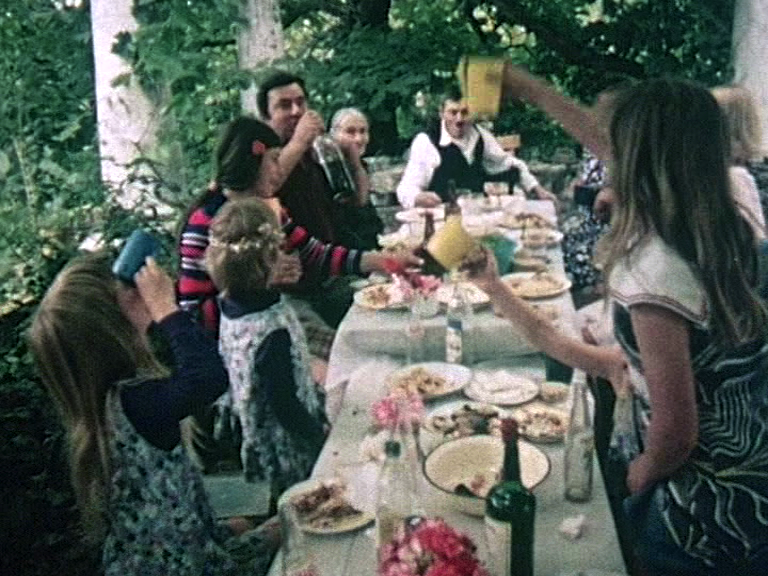
Sadly our sojourn on Corfu finally came to an end. Gathered around the stone table under the grapevines, we had one last party with the Gardigotti family who had made us feel like we truly belonged. With the record player set in the window, everyone danced around the yard. And one last time we chased fireflies with our new friends. Then it was time to start our long drive home, this time through Macedonia and Yugoslavia, bringing tortoises and olive oil and memories to last a lifetime.

Ygeía sas!

Ygeía sas!

vlcsnap-2013-10-14-21h45m14s125

 Post script: We did return when I was sixteen, this time, sharing our adventures with my four-year-old brother. Although things had changed, I’m glad to say much of the Greek island magic was still there.

The Thrill of Twilight

DSCF0936

Do you remember the childhood thrill of playing outside at nightfall?

I was sitting in the hammock bemoaning the fact that it was only 7pm and the dusk was rapidly turning to darkness. From down the road I heard the excited shrieks and squeals of children playing outside, and the memories flooded back. Often when my parents had friends over for dinner, the grown-ups, distracted by free-flowing wine and conversation, would leave us children to our own devices.

Out into the twilight garden we tumbled, the dewy lawn cold underfoot and the wet grass sticking to our bare feet. A pale rock suddenly took on a ghostly hue. The silhouetted woods sent a delicious shiver of fear down our spines. Surely there was a witch lurking in there, or a wolf? All it took was one sudden creak of a bough, or croak of a crow coming home to roost to set us running, running fill tilt, arms outstretched to ward off shadowy objects. Our exaggerated shrieks of terror filled the air. Each circumnavigation of the garden ratcheted up the excitement until someone stopped to spit out a gnat, or scratch an itch, or wail over a stubbed a toe.

Cheeks flush from the chilly air, we’d sneak inside to run our fingers around the remnants of the grownup’s pudding bowl, sure that our giddiness was due in part to the rum in the chocolate pudding. Whispering and giggling, we’d shove snacks for our midnight feast up our sweaters and head out into the full-blown darkness. Flashlight bounced across the garden ahead of us, adding an eerie shadow-filled glow to our surroundings. We all knew that fairies were lurking in the roots of the hawthorn tree, or under the weeping willow, waiting to spirit us away to their magical world. Clutching each other, we’d creep into the vegetable garden and raid the raspberry patch to complete our feast.

We were never ready for it to be over, but at some point the adults would call us in to bed. No tooth brushing, just under the sheets with muddy soles, sticky fingers, raspberry and chocolate stained cheeks, and magical dreams.

The Stolen Child

WHERE dips the rocky highland
Of Sleuth Wood in the lake,
There lies a leafy island
Where flapping herons wake
The drowsy water rats;
There we’ve hid our faery vats,
Full of berrys
And of reddest stolen cherries.
Come away, O human child!
To the waters and the wild
With a faery, hand in hand,
For the world’s more full of weeping than you can understand.

Where the wave of moonlight glosses
The dim gray sands with light,
Far off by furthest Rosses
We foot it all the night,
Weaving olden dances
Mingling hands and mingling glances
Till the moon has taken flight;
To and fro we leap
And chase the frothy bubbles,
While the world is full of troubles
And anxious in its sleep.
Come away, O human child!
To the waters and the wild
With a faery, hand in hand,
For the world’s more full of weeping than you can understand.

–William Butler Yeats (excerpted)

DSCF0906

Mellow Fruitfullness

IMG_2522

There’s a turkey gobbling in the woods behind the house, and condensation on the windows. There’s a low-slow cricket trill coming from the stone wall, the blue jays and crows are serenading the first frosty morning, and the squirrels croon to themselves in the black walnut as they fuss over their nuts. And so the slow countdown to winter begins. It seems like only yesterday I was marveling at the new foliage, fresh and hopeful, like clean laundry. Now the leaves of the maple outside my window are curling and faded to an anemic yellow. Melancholy is a good word to describe the feeling of September. Seasons of mist and mellow fruitfulness, as the English poet John Keats wrote. It leaves me with an ache in my heart for the glorious, carefree summer days, real or imagined.DSCF0528

Yet at the same time a steady candle flicker of excitement burns in me. It’s time to refocus my energies on new projects, and reenergize the old ones. My brain that gets muddled by the soporific heat of July, and lazy in the enervating humidity of August, has clicked into gear. The days and night aren’t long enough for all the things I want to do. Like the birds and the bees, I have replenished my store of energy over the summer and am ready to get my fingers stuck into a cool, damp lump of clay and see if the magic happens. I’m itching to sketch up a new design to knit, and experiment with the bounty of the season in the kitchen. I feel ripe to bursting with ideas. I’m chomping at the bit to crank out the outline of a middle grade novel I’ve been dreaming up, and research a new picture book. My new camera is begging to be to taken for a hike. There are friends to visit, and trips to the city to take my freshly minted college student out to lunch. I think I’ve caught the squirrel fever—Quick, get it done. Get it done. Now if only the dwindling morning light would make it a little easier to get up in the morning.

Season of mists and mellow fruitfulness
Close bosom-friend of the maturing sun
Conspiring with him how to load and bless
With fruit the vines that round the thatch-eaves run;
To bend with apples the moss’d cottage-trees,
And fill all fruit with ripeness to the core;
To swell the gourd, and plump the hazel shells
With a sweet kernel; to set budding more,
And still more, later flowers for the bees,
Until they think warm days will never cease,
For Summer has o’er-brimm’d their clammy cells.
-John Keats, excerpted from To Autumn, September 19th, 1819
IMG_5903


Golden Moments

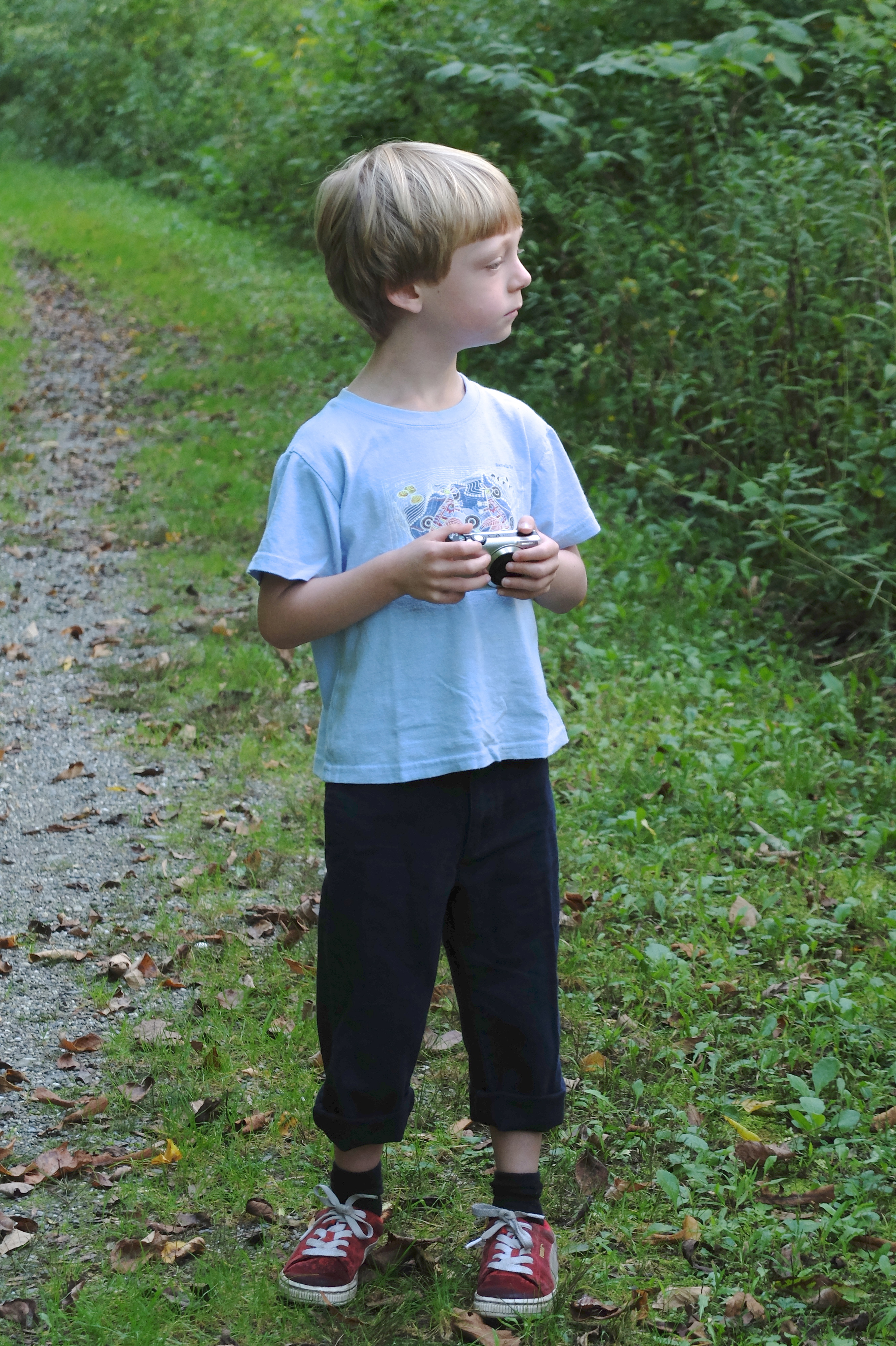
Yesterday was one of those crisp September mornings you could bite into like a perfectly ripe Macintosh apple. My youngest son, having started first grade the day before, was off for the Jewish New Year holiday. It was too good an opportunity to miss. We grabbed our cameras and headed out to our local stretch of the Appalachian Trail.DSCF0381DSCF0377

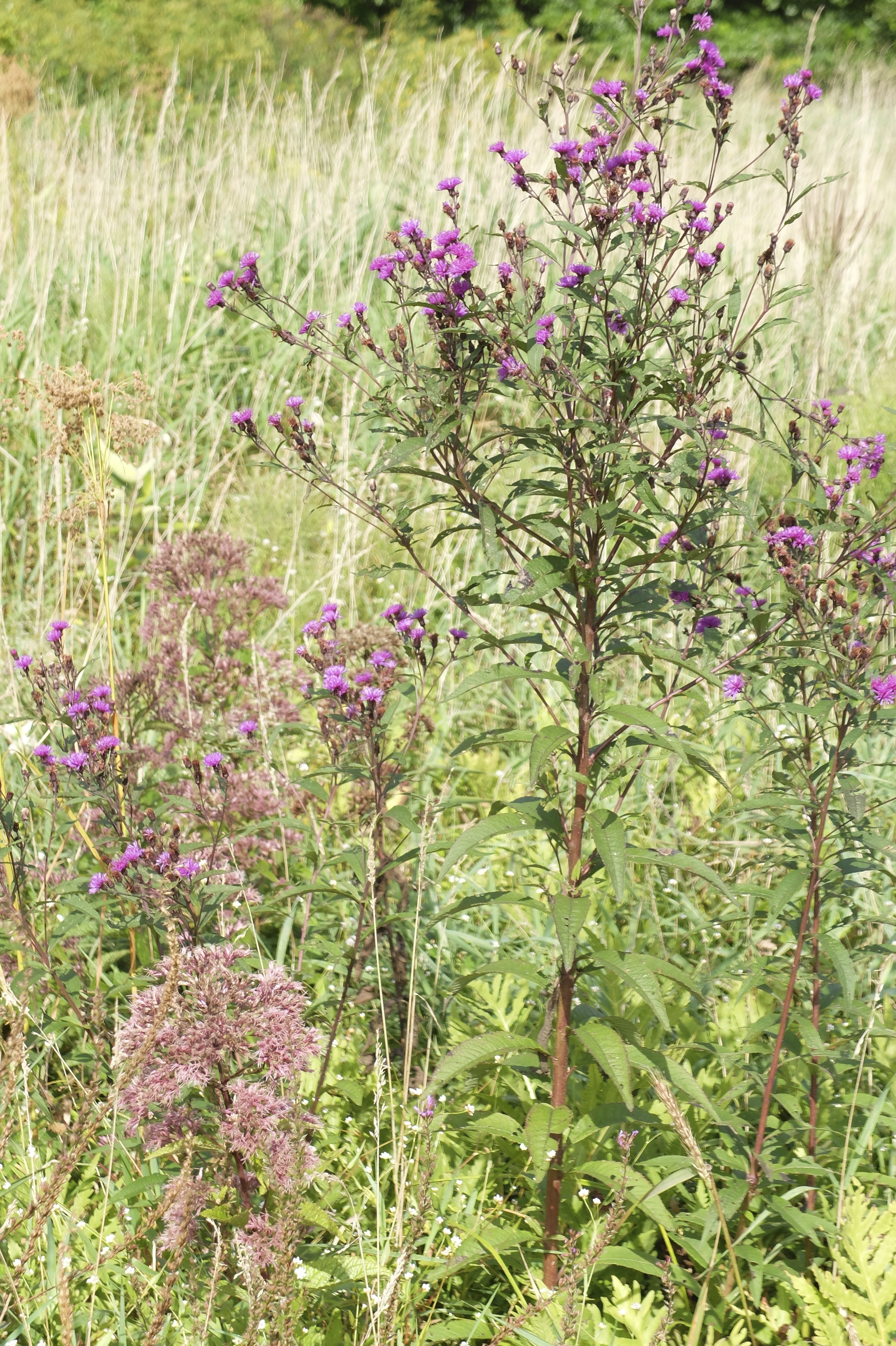
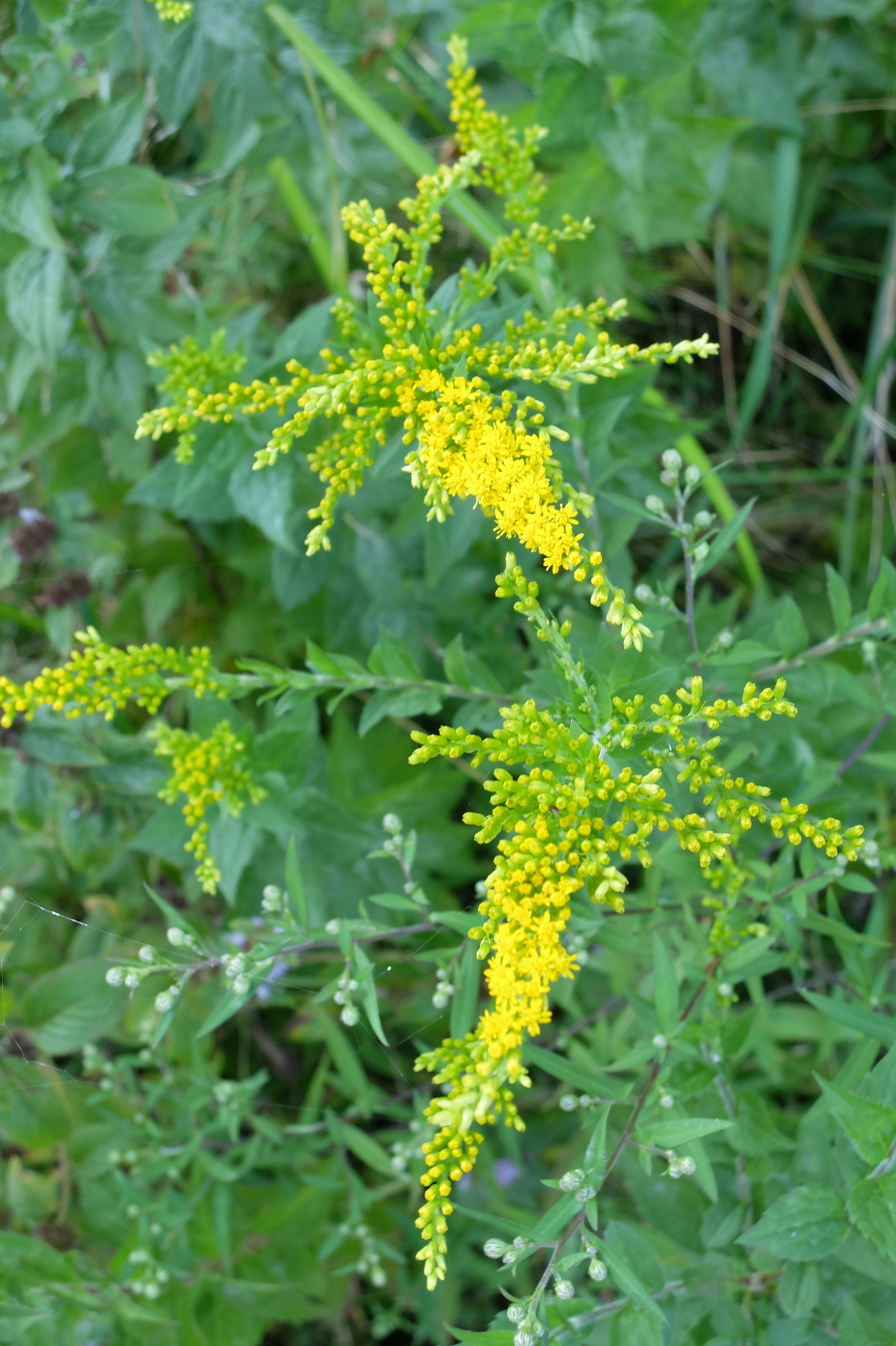
Our first leg of the trail runs alongside a dry summer meadow filled with purple aster and golden rod. My son marveled at the insect orchestra. I pointed out the different pitches and rhythms of the grasshoppers and crickets. We watched goldfinches flitting from seed head to seed head, stuffing their beaks. Trios of cabbage white butterflies danced around a mud puddle. A monarch flapped and drifted, seeking out the last flowering heads of milkweed. The air was sweet with the scent of virgin’s bower, the native wild clematis.

When we reached the woodland, the dirt path was packed, dry clay. But pushing up through the leaf mold, we spied several species of toadstool. When I told Milo about the extensive mycelium network that spreads underground from a mushroom colony, his imagination ran riot. He began inventing Rube Goldberg machines powered by mushrooms that sent secret messages down these connecting tubes.DSCF0370

We reached the boardwalk over the marshes and marveled at the variety of late summer flowers—turtleheads, purple loosestrife, jewelweed, bursting pods of milkweed fluff. At the suspension bridge we gazed down into the slow moving depths of the Pochuck Creek, looking for small trout. I think the herons had got there before us, but we did find an owl pellet stuffed with hair and delicate mouse bones.

At Turtle Bridge we counted nineteen Eastern Painted Turtles, and a water snake.DSCF0367

As we walked back through the woods, it dawned on me that at exactly this spot, six years ago, it had finally sunk in that I was going to have a baby—my youngest son. At 41, with two almost teens, the thought of another baby had been far from my mind. And yet, here he is, six years later, my late summer golden moment. What a gift.

IMG_6583 IMG_6587

SUMMER WRITING FLAB

DSCF0296 DSCF0303

So what’s the problem? It’s a misty, early September morning. A thunderstorm has just rolled through, leaving yellow leaves from the black walnut littering the lawn. The grasshoppers are zithering in the tangle of meadow grasses that I call a garden. My daughter has made it through her first week of college with ease. My sons are enjoying the last few days of freedom before school. My husband is getting a well-earned lie-in for Labor Day. And I’m in a dither. A hand grenade has exploded in my writing life.

Yes, I expected the saggy schedule of summer to play havoc with my writing habits. But what I wasn’t expecting was the complete and utter unhinging of my focus. My butterfly brain dips and swoops from one brightly colored flower to the next, barely alighting for more than a second—certainly not enough to produce any significant work.

And now that the return to normalcy is looming, I’m scared that my writing muscle has gone flabby. I’m bracing for that moment when I sit down in front of my computer and it will feel like a slow, painful jog uphill after months of couch-potatoing, with all the bits of my brain jiggling. I’m afraid that in my absence, my characters will have slipped into bad habits. I’ll look at them and realize that they too are weak and flaccid from lack of exercise.

So what’s to be done? Stop feeling sorry for myself. Strap on the gear and put one foot in front of the other until I’m up to tempo, until the muscles feel taught and responsive, until I can read a paragraph and go, hum, not too shabby.

DSCF0258

The Black Walnut

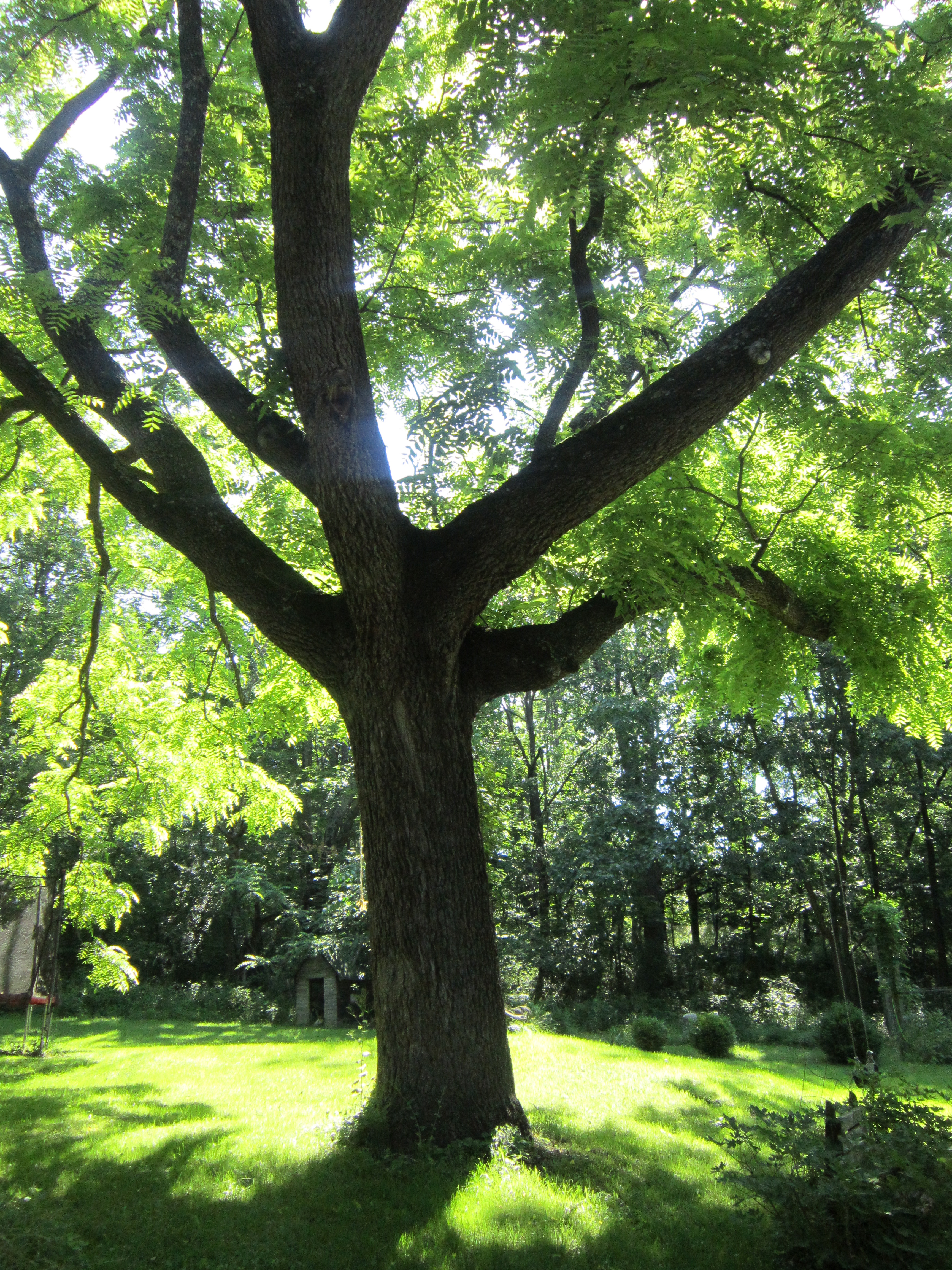
ImageThere is nothing like a tree with its seasonal shifts to work its way into the fabric of your life. The Black Walnut is a truly magnificent specimen, well over a hundred years old. It must have been a sapling, or perhaps just a nut forgotten by a squirrel, when our house was built. On the first warm day of the year, I sit on the wooden bench under its bare branches—it’s one of the last trees to leaf in spring, and one of the earliest to drop in fall—waiting for the children’s school bus to lumber up the road. My daughter jumps down the steps, backpack bumping, yelling ‘spring is here, spring is here,’ and immediately rushes to change into shorts and t-shirt. My son already has his shoes and socks off. We sit in the tree’s embrace enjoying afternoon tea and cookies, a holdover from my Irish childhood. We watch the chickadees clinging to the birdfeeders that hang from boughs in front of the kitchen window. Soon we’ll have to take them down so we don’t find our neighborhood black bear picnicking under them. No sign yet of the wren family that likes to nest in the birdhouse fixed to the deeply fissured bark of the trunk.

Our house faces south, backed by deciduous woodland where the deer lurk with evil intentions toward my flowerbeds. The entire garden is on a slope leading down from the tree line—not enough to get a good sled run, but enough to work up a sweat with a lawnmower. The Black Walnut sits in the middle of this slope, and is so conspicuous that I use it as a landmark when giving directions. Its spreading branches are an umbrella sheltering the lawn and casting a leafy shade over the kitchen windows in summer, bathing the house in a cool, green light. It’s wonderful on a hot day to lie on my back staring up through the dappled leaf-light at patches of blue sky. In winter the greenish grey limbs etched in white, stand majestically in the landscape.Image

I have an on-going love/hate relationship with the tree. As far as the branches stretch, so do the roots. They produce a toxin that is lethal to tomatoes, apples and others. If its toxin doesn’t kill plants and shrubs, its thirsty roots will. Add to that its shade shedding branches, and it doesn’t leave me much space to garden in.

Who needs a dog when you have a Black Walnut? It’s constantly shedding. Starting in late spring it sprinkles my seedling trays, set out to harden off before transplanting to the garden, with small greenish flowers and wiggly catkins. After summer storms I gather armloads of felled twigs from under its skirts. Throughout the seasons the nuthatches and woodpeckers run up and down the branches tapping away industriously and strewing chunks of moss and lichen and bark over the lawn. Well before the first frost, the leaves carpet the grass in pale yellow mounds. They are followed by wiry, foot-long, leaf stalks that don’t sit well in my compost heap. Then the nuts start falling and the garden becomes a hard-hat zone.

The walnuts form in a thick lime green, aromatic husk. As they lie on the lawn, turning it into a mine field for the unwary, they quickly rot down into a gooey, black slime, which is one of the most effective orange, brown stains I have ever encountered, impossible to wash out of socks, or off hands. I offer the kids cash rewards to pick them up in bucketfuls.

The hard-shelled nuts are supposed to be delicious. Each fall I squeeze a mound of them out of their slimy cases and set them to cure on a sunny wall. When I remember them a week or two later, the squirrels have long since made off with them. By this stage I am so sick of picking up after the tree that I don’t want to see another nut, and so, promising better results next season, I give up.

The tree is slowly dying. When the nor’easters blow I lie in bed wondering if this will be the one. A few years ago we called in arborists for estimates on trimming the branches that lean over the roof. One chap pulled up in his truck and walked around the Black Walnut shaking his head. He said the whole thing had to go. We sent him packing instead.

Eventually, the Biker for Jesus who lives down the road swung up into the branches and neatly pruned the errant limbs. The cut-up logs are waiting for my husband to make the children a wooden swing seat to hang from its sturdy limbs, and a sign for his company, aptly named, “Black Walnut.”

According to the Audubon Societies Field Guide to North American Trees the wood is ‘one of the scarcest and most coveted native hardwoods.’ Jokingly I say that when it does fall on the house we can sell the wood to mend the roof. But for better or worse, this tree is very much a part of the home we have created for ourselves.Image