Category Archives: Writer’s world

High Jinks in the Harem

IMG_3793

You’re a write eejit when you’re visiting the harem of the Topkapi Palace in Istanbul, and all you can think of is that life here must have been an endless Turkish soap opera.

Forget the sex—the depiction of the harem as a den of endless orgies and plump naked women lying around, ripe for the plucking is largely a construct of the Western imagination—can you imagine the intrigues and scandals that went down? One would give a major body organ (and some did) to be a fly on the wall in the harem.

Harem paiting

John Frederick Lewis

The harem was the main living quarters of the Sultan, his dear old Mum, sisters, wives, children, consorts, female servants, and of course his concubines. It was a world of women—with the exception of the Sultan’s most trusted eunuchs, and the young princes who remained there until they came of age. The name harem says it all: sacred inviolable place, or forbidden place.

Each group had their own buildings, clustered around a courtyard. For example, The Courtyard of the Concubines, The Queen Mother’s Courtyard, or the Eunuchs Courtyard. There was a strict hierarchy in play. Novices lived on the upper floors, while senior staff, and most favored lived on the ground floor. The chummier you were with the Sultan, the closer your proximity to his chambers.

The Sultan’s mother—and yes, that would make her the mother of all mother-in-laws—wielded serious political clout, as did his wives. These lucky few could bend the ear of the Sultan in a highly confidential setting.
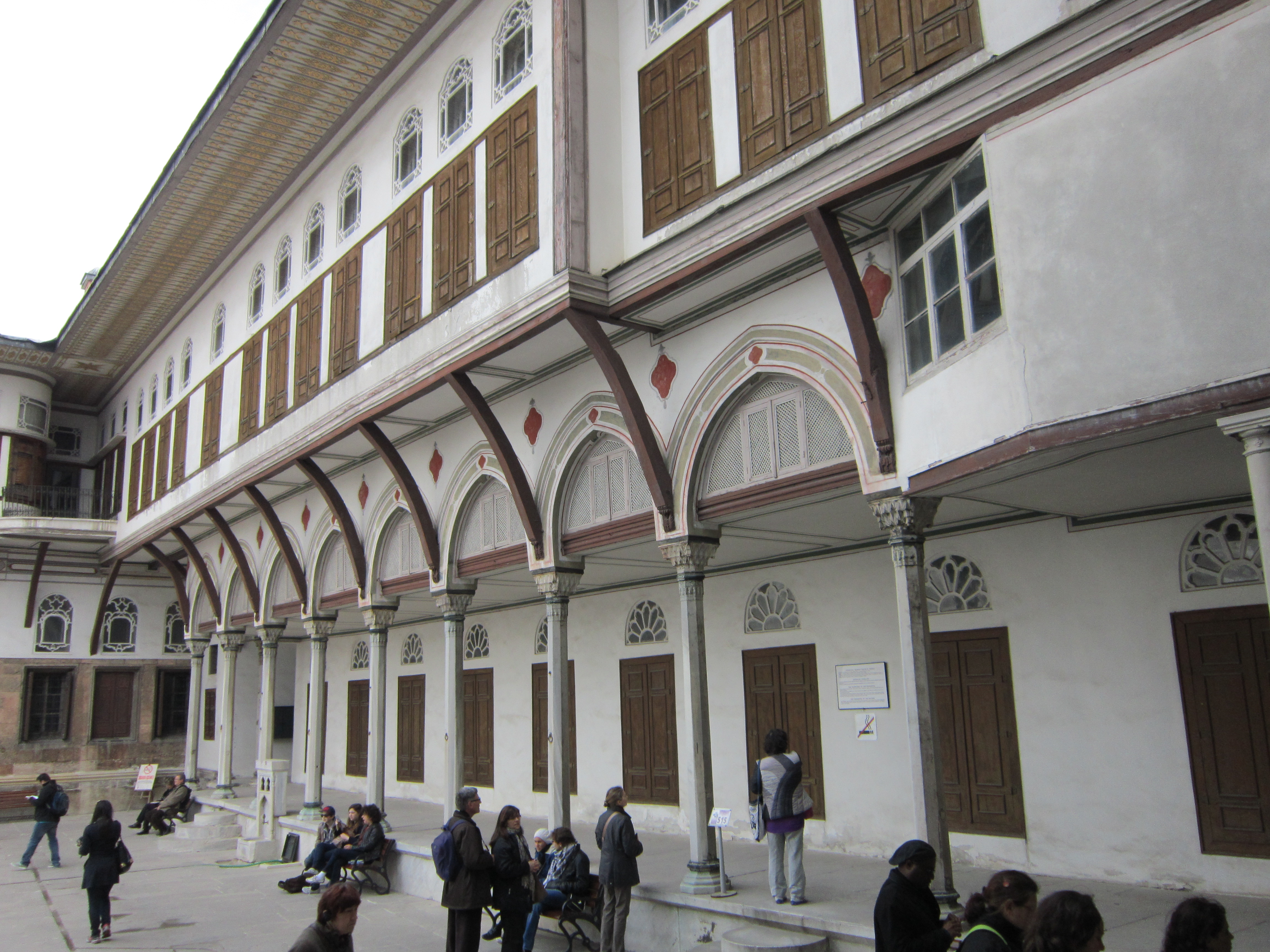
Courtyard of the Favourites
Courtyard of the Favourites

IMG_3816

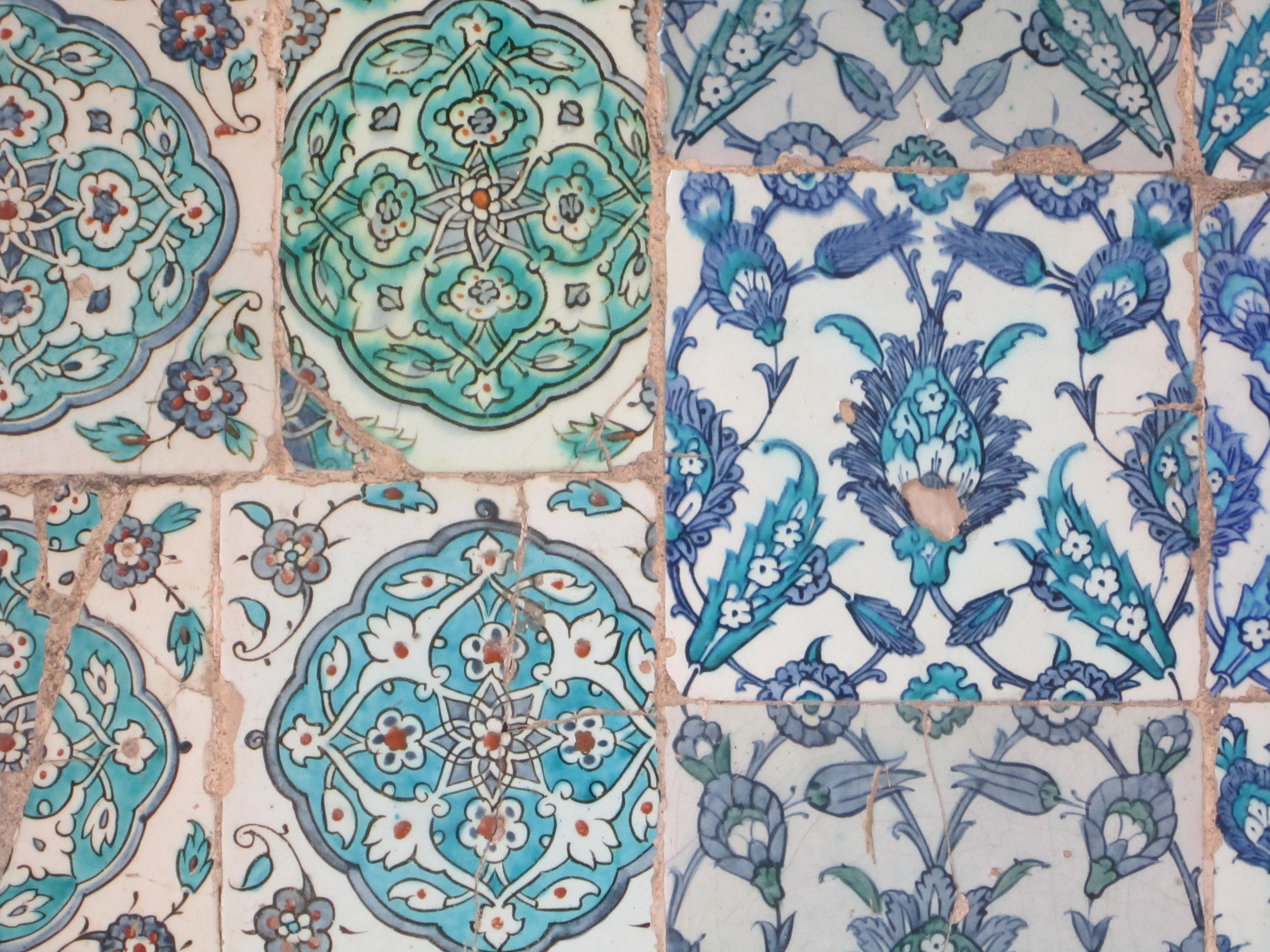
As you wander around from one stunning, tiled room to another, you can’t help imagining what it must have been like to be a young concubine in the 17th century. For a start, you’d need the prerequisite bona fides even to be considered for concubinage: be well-brought up from a family eager to curry favor with the court (or a kidnapped prisoner), young, intelligent, and relatively attractive—no hairy mustache or body odor. On arrival at the palace, you’d be handed over to a strapping, black eunuch who’d show you to your living quarters at the very top of the harem complex, far away from the luxurious quarters of the most favored consorts, and even further from the wives’ quarters, and so far away from the sultan’s boudoir you barely ever caught a glimpse of him. You’re dreams (if you weren’t pining for that cute village boy you’d left behind) of becoming one of the sultan’s favorite wives and bearing him lots of fat sons, and eventually becoming a great and powerful lady, all while leading a life of leisure and opulence, would be fading fast. You’d probably be put in charge of an older concubine who’d “aged-out” or never made it to the big leagues. And it would be her responsibility to show you all the tricks of the trade. All around you, you’d hear snippets of gossip from your fellow novices, and chatter from the eunuchs overseeing the household: who was in favor, who had betrayed a confidence, who had tried to run away. And sooner or later you’d be sucked into the daily dramas and intrigues of the harem, and find yourself succumbing to petty jealousies. Why was that snotty cow from Ephesus picked to dine with the Sultan and not me? She’s got fat ankles. Or, why did that girl with fur all over her back like a bear get to dance for the Queen Mother? You might find yourself second-guessing your special abilities; maybe my singing voice is rather like the screeching of the gulls. Or comparing yourself unfavorably to those around you: My bottom will never bounce like Zeynep’s when I walk. Before you know it, you’re in a right funk and instead of rejoicing in the good fortunes of your fellow inmates, enjoying their camaraderie, and learning from their experiences, you’re envying their success, and mixing up herbal potions to give your rivals genital warts.

Okay, so you’ve probably guessed where I’m going with this—this world is not too different from the world of writers. As we struggle with yet another rejection, it’s hard not to occasionally look on the achievements of our fellow writer’s without a touch of envy.

Permit me to flog this Turkish harem analogy to its death. Let’s plunge into the Hamam or traditional Turkish bath house. Here, in a scene that could be lifted from a Fellini movie, luscious naked women of all shapes and sizes, lounge on the heated marble slabs. Once the steam has opened the pores, the women take turns scrubbing each other, and massaging away the tensions of daily life, leaving a healthy glow of bonhomie.

As a community of writers, instead of indulging in petty jealousies and insecurities, we should all learn to be back scrubbers and ego massagers, knowing that our turn will come, and oh, how good it will feel.

IMG_3825 IMG_3854 2

Hot date with your psyche

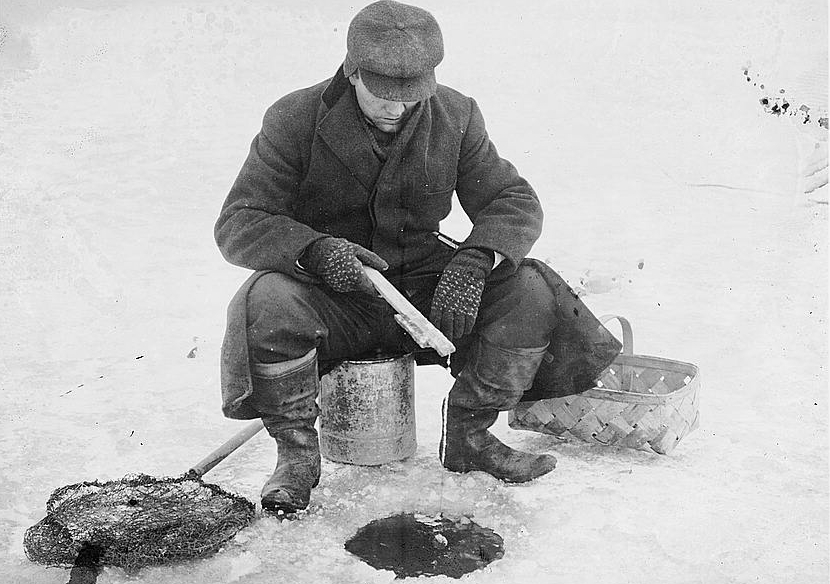
icefishingYou’re a write eejit when you haven’t checked in with your psyche since Iceland last went volcanic.

Sad thing is, you never know how much you need to do it, until you do it. Duh!

So, it’s my late winter get-in-touch-with-my-inner being time. I have a hot date with my psyche. I’m taking it away for the weekend up to the Berkshires of Massachusetts. We’ll sit, wrapped in a blanket, bemusedly gazing at small clots of ice fishermen, breathing in the 15˙ air through coffee breath and last night’s beer-furred tongues.

Of course, whom I’m actually getting in touch with is highly subjective. Aristotle would sit me down and point out that my quiet weekend was actually quite a crowded affair with all three of my souls or psyches present—my (party) animal, my morning-after vegetal, and my rational (oh my god, you mean I have to clean this shit up!). If you ask Jung, I could be communing with my psyche—the totality of all my psychic processes—and on a whole other level with my soul—or partial personality. Yeah, I was afraid of that! But Freud would argue that I’m partying with my Id and my Super Ego, and my Ego is sitting in a corner acting as chaperone.

But whatever. I’ll be there, enjoying the peace and quiet, and it’ll hit me that there’s nothing better than sitting and listening to good music and thinking about parallel universes and something and nothing. My brain’s been strapped to a conveyor belt for months and now, finally, I’m taking it for a walk in the woods. It’s like a puppy leaping down each leaf-strewn path, sniffing at tree stumps, eating deer poop, squatting to mark its territory.

And then something—or nothing—will strike me as being peculiarly funny and before I can edit myself, a laugh bubbles out of me. I feel the stress that has been building in the knots at the back of my neck making me look like a latter day Quasimodo, leaving my body.

Of course me and my psyche would be firmly and bitterly divorced by now if I hadn’t figured out that in my everyday world I have to snatch those moments of freewheeling introspection wherever I can: Sitting in an early-morning rumpled bed, sipping tea and doing the daily purge in my notebook, or after lunch, curled up on the doorstep like a cat, soaking up the faintest kiss of March sun, or later, in the evening, between the simmering rice and steaming vegetables, sitting in the iridescent green armchair in my study, watching the day’s light leech out of the sky and the first planet beginning to glow.

Those are my stolen moments of sanity, when my inner psyche and my outer goddess hang out with a glass of nectar of the vine and make daisy chains out of something—or nothing.

Begining of the Gardener’s Year

IMG_3320 IMG_3310So, here’s a little essay I read on National Public Radio a few years ago.

Catalog Season,

The Beginning of the  Gardener’s Year

They start arriving during the holiday season, squished in with the endless toy sale coupons, credit card bills, and the rare Christmas card. The catalog covers are bursting with wholesome goodness, though a true gardener knows the truth – you’ll never get botox tomatoes or porcelain perfect rosebuds in your garden without the use of massive amounts of toxic treats. That aside, their luscious covers stay my hand as I’m about to toss them in the recycling pile. Over the next month or two my bathroom will become the resting place for an ever-increasing pile of plant and seed catalogs. This is for strategic perusal during a moment of privacy in the manic holiday season.

By mid-January, when the deer have eaten their way through anything left sticking up out of the snow, and all hope of a shrubbery is growing dim, I get those first twinges. I feel an urge to see seed trays cluttering up the windowsills and kitchen table. I start feeling wistful for that warm place under the kitchen sink– the perfect spot for cozy, dark, moist germination. I’m feeling the drag of winter, and the hopeful swaying towards spring. Winter in the Northeast lays down heavily from January through February and into March, and then teases through April. But I’m beginning to sense the latent promise of the soil.

The catalogs are dragged out of the bathroom and piled by the couch. On brittle winter evenings, by lamplight, I start the long slow sift. Of course, it’s all about fantasy, little will actually be bought. Gardeners have to dream at this time of year: the perfect herb garden springing up amidst neat mounds of box wood and crunchy gravel, a rustic arbor overflowing with grape vines and late summer roses. Perhaps this year there’ll be a woodland bower with trickling stream and dappled shade flowers. With the back of an old envelope I go to work on the grand scheme.

Once I have perused the warty old heirloom vegetables in the organic catalogs, and the glossy offerings from the established old nurseries and fallen in love with some exotic vine from Peru that will never survive in my deer-infested garden, I pass them on to the children to cut-up for school projects. Those genetically modified tomatoes go right at the top of the food chain. In a Martha Stewart-inspired moment I have cut and pasted a rose garden full of gift tags.

I have a weakness for the cheapo catalogs, printed on wafer thin paper and bursting with special offers and 1¢ marvels. The crudely touched up photographs and the neon colors jump off the page at you. I especially love the cheesy photos of children dressed in ‘70’s outfits and sitting atop giant pumpkins with bemused smiles on their faces. I think my all-time favorite was a bonnie baby clutching a sweet pepper as big as its head with the title “Super Heavyweight Hybrid”. Some of the offerings are intriguing – a fruit cocktail tree straight out of “Willy Wonka” which bears plums, peaches, nectarines and apricots. While others are just plain scary. Surely the ‘Hairy Giant Starfish Flower” comes from outer space.

There is no such thing as too big or too sweet in the vocabulary of the people who write the copy for the vegetable and fruit catalogs. They seem to have a passion for words such as “Juicy”, “Smooth”, and “Delicious”. And then of course there are the names – “Fat “n” Sassy”, Mammoth Melting Sugar, Magnifisweet, Delectable, Phenomenal, Serendipity, Love-Me-Tender and Florida Speckled Butter. How could one not succumb? My success rate from these cheap and cheerful orders is about the same as from the much grander (and more expensive) nurseries. Which only goes to prove that I can kill cheap or expensive plants equally well.

Once I’ve reigned in my ambitions and placed my modest order all I have to do is sit back and wait for that freak 80˚ day in April when the dear UPS man will roll up in his van. Of course the garden will be untilled – a quagmire of spring mud. The tender plantlings will languish in a shady corner of my mudroom for several days. Insistent birdcalls staking claim to sections of the garden will get me out of bed at 6am. With fork in hand I’ll brave a light frost and watery sunshine to start the backbreaking work of turning over the soil in the perennial garden and the vegetable patch. Large clods of earth held together with ice crystals get turned over and left to sunbathe.

Hours later, I’ll waddle, with bent back, to the aptly named mudroom, my boots coated in a gelatinous layer. The next day, if there isn’t a late season snowstorm I’ll plant the baby leeks and get the first sowing of peas in. I’ll look down and notice that the paper I grabbed to put under my muddy boots is last season’s plant catalog.

Mud Season

Mud-Wrestling

You’re a write eejit when you love to play in the mud.

It’s that time of year where I live. A few days of rain and sleet have melted the foot or so of hardened snow and ice and turned the top layer into a gelatinous, brown mess. I didn’t get out early enough for my run through the woods and the icy ridges that I can usually balance on had turned into a mushy quagmire. I came home up to my uxters in mud.

There’s always a stage in a project where it turns to mud. Each direction you look you’re wallowing in muck. How did you get here, and more to the point, how are you going to get out?

It’s all a matter of perspective, folks. Once upon a wet, misty day in Ireland—yes, that could be any day, but this one was particularly memorable—I was six and my eldest sister, eight, and our parents took us for a hike up a mountain in Connemara. (In Ireland you don’t sit around waiting for the rain to stop, otherwise you’d never go anywhere or do anything.) So there we were, the four of us, being pummeled by gale force winds on the top of a craggy peak, the car was a tiny speck far below us with acres of steep, godforsaken bog and sheep tracks between us and the chocolate bar I’d left stashed under my seat. My short legs were already aching, and my Welly boots full of sludge from falling in one too many bog holes. What’s a girl to do? As we slipped and slid our way back down the mountain, rapidly becoming more and more covered in mud and soaked to the skin, my mother gave up trying to keep us upright. “All right, girls, go for it!” That was all the encouragement we needed. My sister and I rolled down the rest of that mountain, bumping through tussocks of bog cotton and cushiony pillows of heather. By the time we reached the car we were beyond saturation point. My mother stripped us off and wrapped us in scratchy wool blankets, and we sat grinning all the way home, munching chocolate.

You see, sometimes you just have to embrace the chaos, not wallow in it. As the gardener and the potter and the writer knows, if you’ve got mud, you’ve got substance. It’s ripe for growing. But first you’ve got to play a little. Revel in the chaos, and then slowly, slowly, let it take shape.

Letting Go

You’re a write eejit when you treat your manuscript like your baby.
I’m not the overly sentimental type—or at least I do a good job of hiding it. I wasn’t the one blubbing like a baby at “Mary Poppins” (not looking at anyone in particular, man-mate!) But I confess, when I put my youngest on the bus to kindergarten for the first time, I did feel that mother-child bond stretch out like an over-zealous rubber band, and it brought a lump to my throat and a tear to my eye. That wee one that had been clamped to my hip and shin for five years, had just blown me a kiss from the other side of the road and hopped merrily on the bus without a backward glance.

Okay, okay, I hear you groan—not another Mommy blog. Well, yes, but just this once, and only to make my point. (I’m not above exploiting my kids.)
So it’s with trepidation that I prepare to send premier child off to college. What if I didn’t get it right? What if I read all the wrong child-rearing books? (Actually, I don’t think I read any.) But what if I didn’t feed her enough kale or Vitamin D. Maybe I shouldn’t have had her vaccinated, and maybe all those fluoride treatments were a mistake. I didn’t teach her to ride a bike. I didn’t talk enough about sex, or maybe I said too much. I showed, but didn’t tell. Maybe I suffocated her character—didn’t let it evolve naturally. Should I have insisted she not swear so much?

Baby-Bird-Learning-to-Fly1-251x300

And then I pull myself up short, because I’m being as neurotic about my parenting of my daughter as I am of my books. Can you parent a book? I hear you ask. Yes, most definitely, yes!
You have sleepless nights while it’s in the newborn phase—lying awake for hours wondering if you’re doing it right. You can’t imagine how your baby can ever grow up and demand less of your attention. And then slowly you hit your stride. Sometime you’re cruising along taking every corner like a pro. Other times you’re flailing around like a one-legged roller skater. Sometimes you get to the stage where you just want to throw up your hands and yell, “I quit!” But you can’t. You’re in it for the long haul. And then there are those few and far between days when every, just every little thing, is bloody brilliant.
And as with parenting a child, there comes a time when you have to push that offspring out of the nest. No more editing, looking for stray commas, dangling modifiers. You’ve given it a good talking to and told it to do its best, and never go home with a guy who’s weirder than its brother, and . . . It’s all about giving it wings and letting it fly.

Reckless+Abandon,+photo+by+Peter+Brannon+(A+baby+owl+learning+to+fly)

Photo by Peter Barron


Cotter Pin

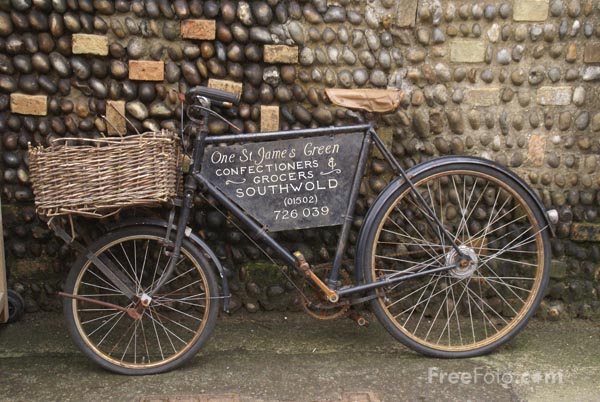
1bike2 Old Bicycle

You’re a write eejit when your cotter pin takes a hike.

One summer I was waiting tables in Montauk, Long Island. I bought a cheap bicycle to get from my flop pad to the beach to the restaurant. It worked, barely. Some sage person advised me that the reason items of machinery (the names of which I am not privy to) clicked around and around when I pushed down on one of the pedals, getting me nowhere fast, was because my cotter pin was missing. Well, today, the cotter pin that keeps my brain from banging around in my skull failed to report for duty. You know that feeling when your gears are spinning but not engaging?

I faffed—don’t you just love that word—around for the day. I poked at my latest query letter. Godricks jockstrap, they’re hard to write! Why are there fifteen ways of saying anything?

The clichéd: When Miranda loses her boyfriend to sexpot Lavinia, it can only mean one thing—she must discover her inner diva and fight back.

The colloquial: Miranda goes apeshit and swears she’ll get her pound when Lavinia, the local ho, jacks her two-timing piece of sh*@ fella . . .

The businesslike: Miranda’s boyfriend cheats on her with the popular girl in town. Miranda takes up pole dancing and swears revenge.

Okay, lame examples, but you get my point. Not a task to be undertaken when your cotter pin is slipping.

The Ramblings of a Write Eejit

I’m a write eejit . . . if I think I stand a chance of competing with all the brilliant people out there blogging about how bloody brilliant they are.

So, here’s what I’m proposing: I sneak in the back way. Instead of wit, Pulitzer prize-winning writing skills, and amazing connections in the blogosphere, I’ll use good old self-deprecating humor. The Irish are brilliant at poking fun at themselves; they raise it to a fine art, think of Samuel Beckett or Graham Norton.

By definition, self-deprecating means I’m going to have to talk about myself—a lot! Who else’s head can I crawl inside and poke around in, lifting flaps of skin here, squinting down bundles of neurons there, looking for a snugget (even smaller than a nugget) of enlightenment?

And on the subject of enlightenment—be honest, folks, who isn’t looking for the answer to that Big Question, Why Are We Here? I mean there’s got to be a reason that gobs of oxygen and hydrogen and nitrogen and (okay, I didn’t get chemistry, but I was very good at biology) all came together in such perfect harmony (think Coca-Cola Christmas ad) and allowed us mortals to flower into existence. Or why a particular batch of DNA soup produced me. So, I hear you ask, what is that reason?

To think our way out of the box, of course. If you don’t know that yer a right eejit.

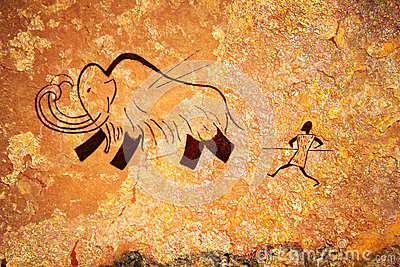
Let’s face it, thinking outside the box is the only way forward. Early man could have made a mental note to avoid that stretch of river bank where the ooze sucked you in up to your knees, but instead he scooped up a handful and squeezed it between his fingers, feeling its smooth elasticity and bingo, he got a crazy idea . . . he could shape this goopy stuff into a pair of cupped hands and the dense clay would hold things, like water, grain, and berries. Actually, truth be told, it was far more likely early woman was sitting on the river bank trying to snag a few minutes peace and quiet while the kids were happily making mud pies when she had her eureka moment.

Either way, it—creativity—happened, and civilization took a step forward.

I firmly believe we all have that deep-rooted creativity in our genes. Of course it manifests itself in myriad ways in say, the tech world, the business world, or art world. But it’s the driving force behind progress. The reason we’re here is to get creative. What are you waiting for . . . off you go now and get busy with the glue gun, or the pen, or the spade, or the drum machine.

cave-painting-of-primitive-hunt-thumb25057391

beckettGlasses