Category Archives: Writer’s world

COMFORT FOOD: BREAD

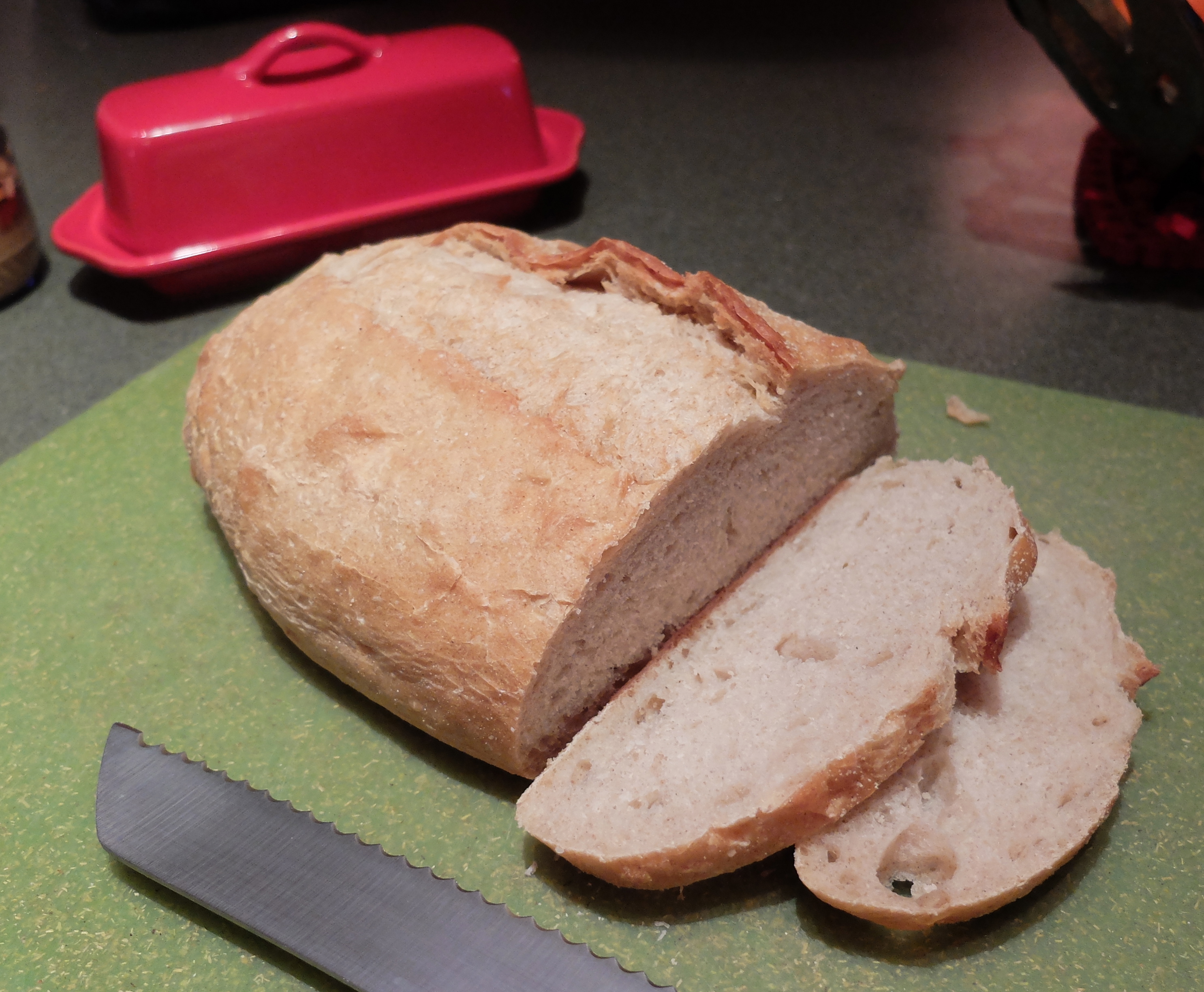
DSCF4060We all have our comfort foods—mine is bread. White bread was a staple of my Irish childhood—the sliced pan, as it was known. It made excellent toast images-1fingers for dipping in soft boiled eggs, or for spreading with honey, or munching with a heap of baked beans.

When I was a little kid my mother and her friends went through a hippie phase—transcendental meditation, yoga, lentils, you know the kind of thing. The upside was delicious homemade yogurt and yeast bread. That distinct sour yeasty smell when you took a big sniff of crusty baguette hot out of the oven still lingers. Later, brown-soda-bread-234x260she made wonderful, dense brown soda bread with a dollop of sticky treacle added for sweetness.

At Granny’s house, the bread came from Eileen’s, the tiny corner shop. You bought an uncut loaf, big as a doorstep, and so fresh it could get up and dance a jig. It was the perfect bed for a slab of bright yellow salty butter from the farm down the road. You had to watch out for the collie dog though, he was a nipper. And of course you had to top it off with Granny’s raspberry or gooseberry jam.

My other grandmother allowed me the treat of butter and peanut butter on my bread. But my abiding memory is of my grandfather’s breakfast ritual. When we came downstairs he was already seated at the table in a low-slung armchair, hair neatly combed, his thin body all jutting angles of knees and elbows. Arranged in front of him were his plate of toast, his gold-colored teapot and mug, and a book perched on a stand he’d made specifically for reading at mealtimes. His chin hovered no more than an inch or two above all this. But the beauty of the arrangement was that it allowed him—ever a fastidious man—to eat and read without taking his eyes off his book, and with no fear of crumbs cascading down his cardigan.

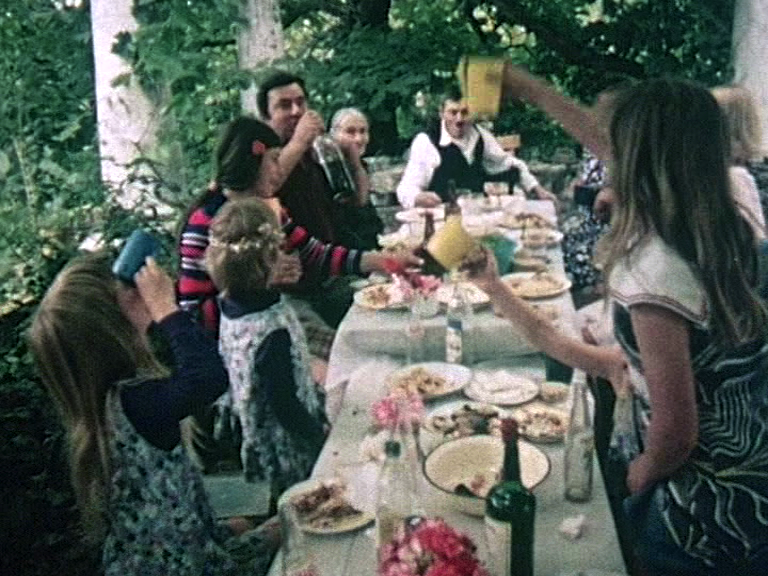
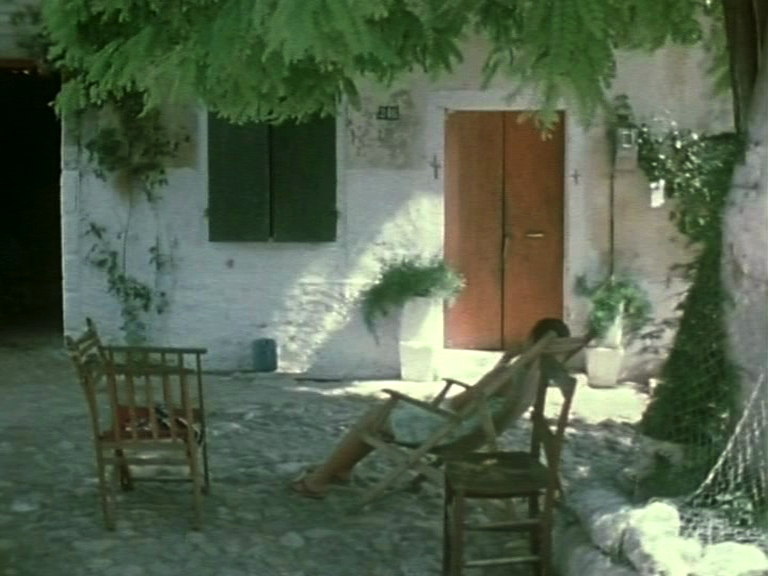
When I was seven we went to live on the Greek island of Corfu. The strange new foods were a shock to my bland Irish palette. Luckily, the coarse bread (an artisanal country loaf in today’s vlcsnap-2013-10-14-22h02m50s148parlance) made by the village baker was delicious. My sisters and I would get up early and gallop through the narrow, whitewashed streets to arrive in time to watch the loaves being pulled from the oven on long wooden paddles. The bread never made it home in one piece. On days when we went filming with my parents for the documentaries they made on the island, we would take along a picnic lunch. In a shady olive grove we’d listen to the cicadas zithering, eating chunks of bread doused in green olive oil and topped with sweet tomato slices and slabs of salty feta.

My first year in college, I’d come home late at night, starving, awash with experiences from my new adult world, yet still craving childhood comforts, and make myself a round of hot-buttered toast and marmalade.

Bread is still one of the great joys of my life. One of my favorite things to do is share a weekend imagesbrunch with my family: a crusty loaf of sourdough from the farmer’s market with a homemade soup to dunk it in, jars of hummus and basil pesto from the garden, slices of pungent local cheese, and plates brimming with cucumber and tomato slices and a handful of briny Kalamata olives. Heaven on a plate!
The West of Ireland in Winter

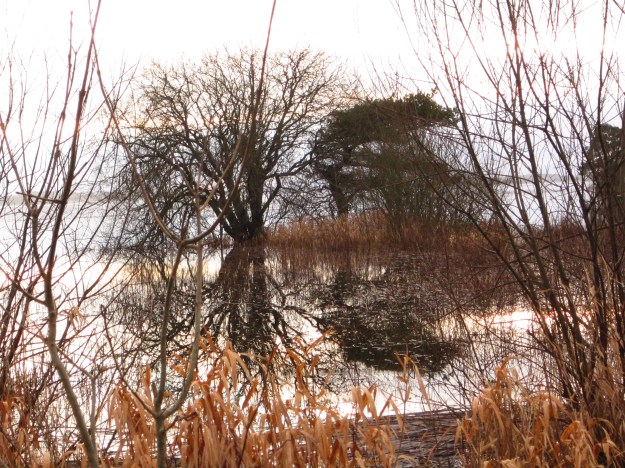
High water, Lough Carra, Co. Mayo

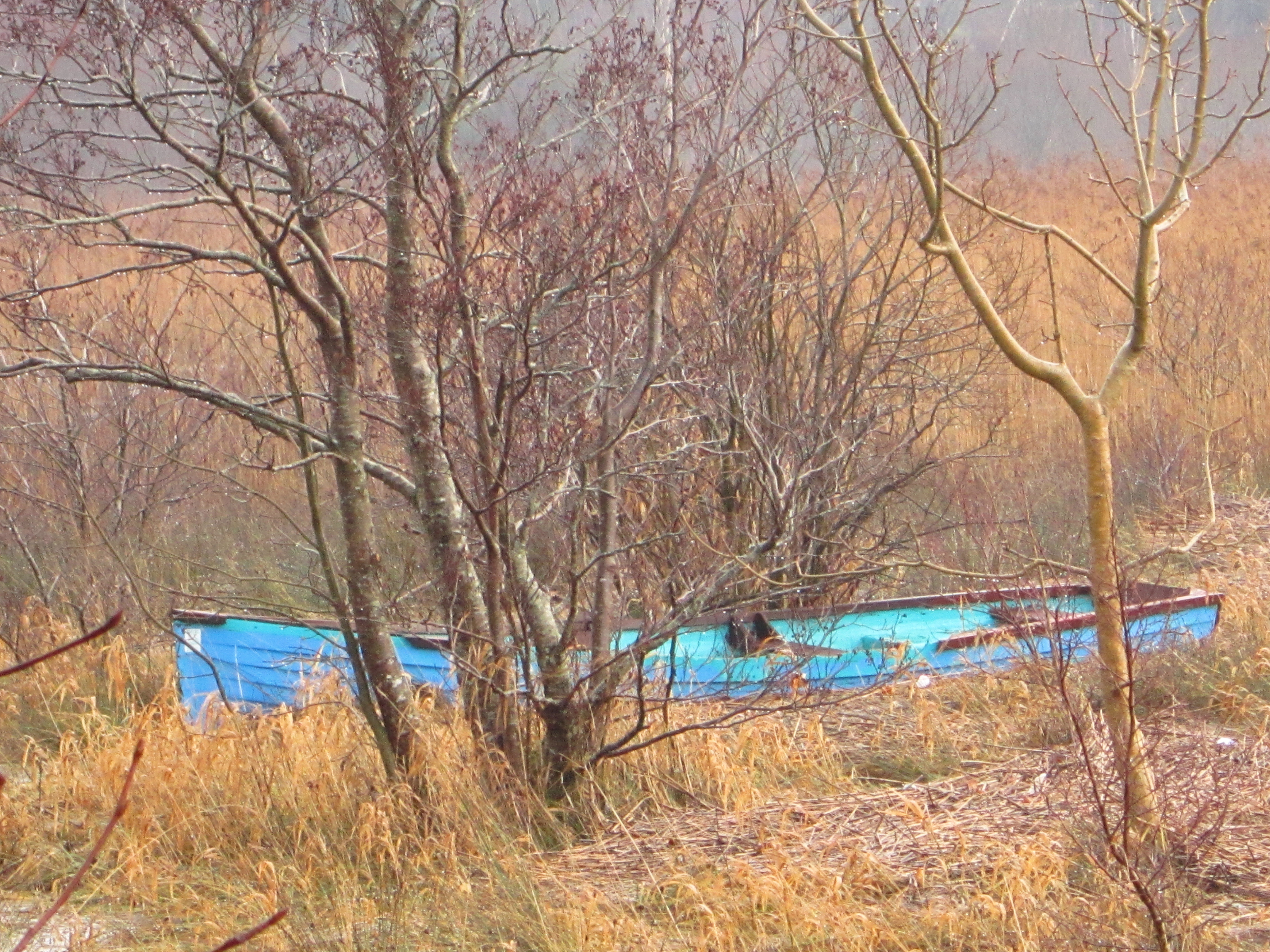
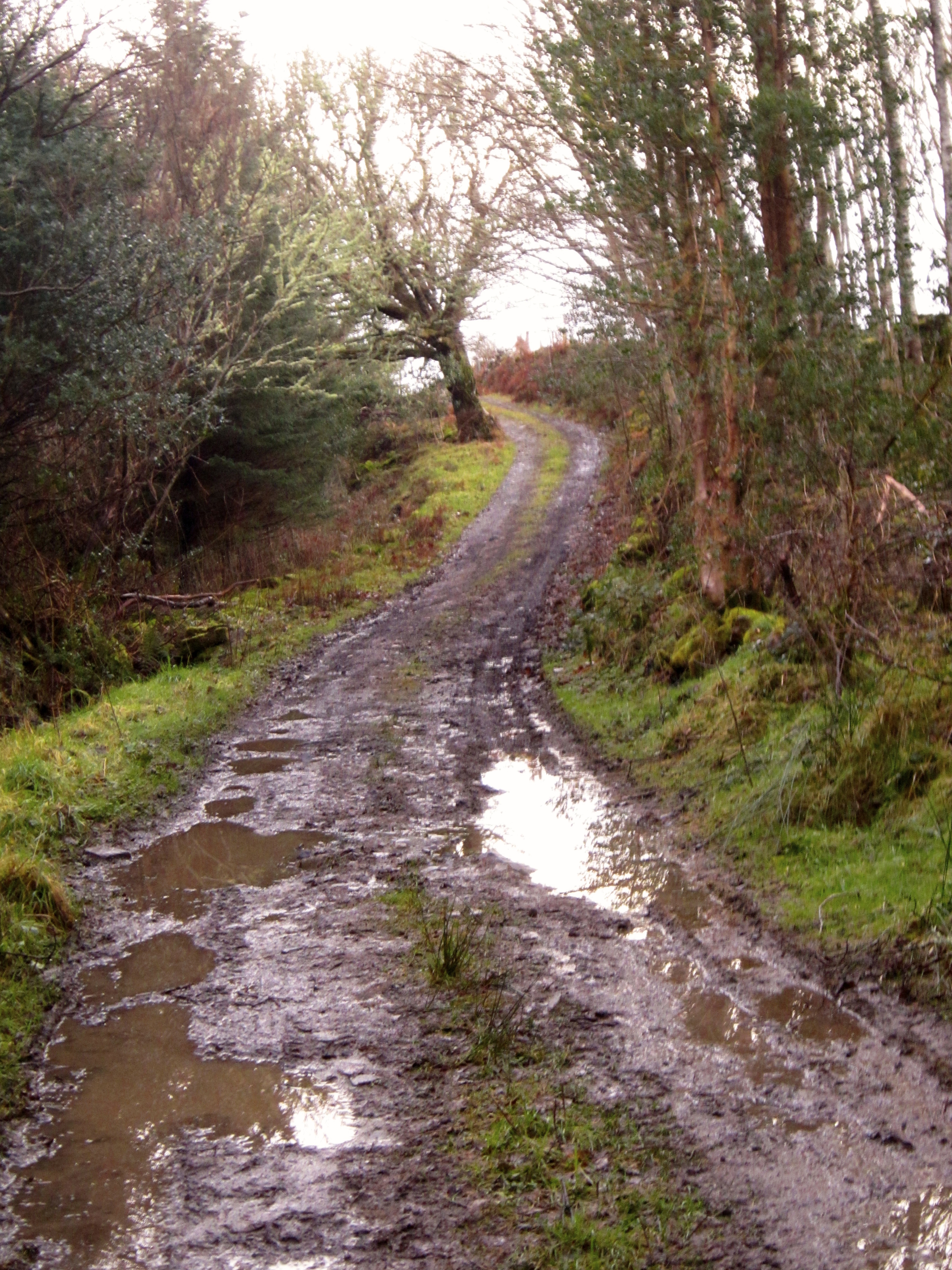
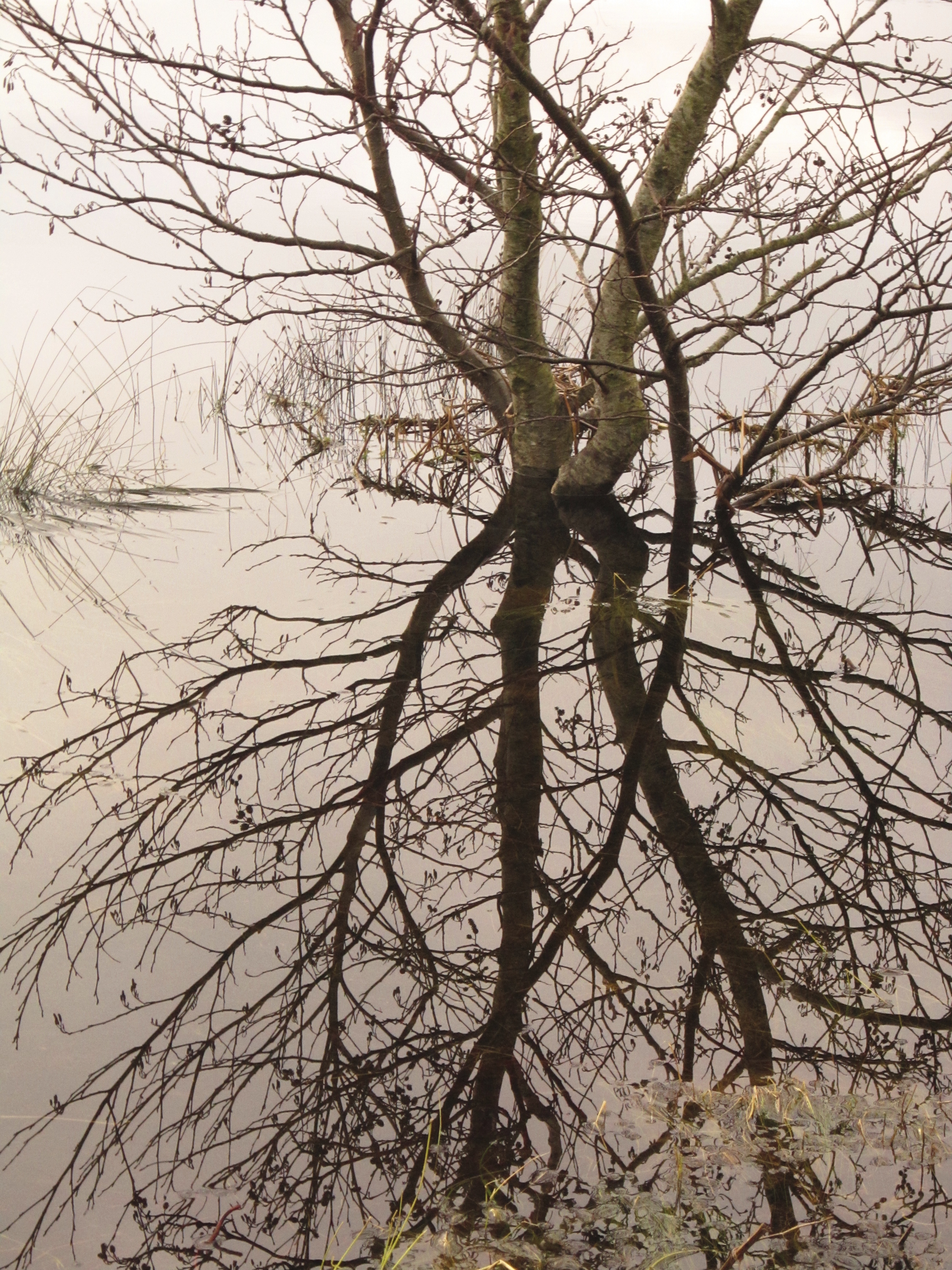
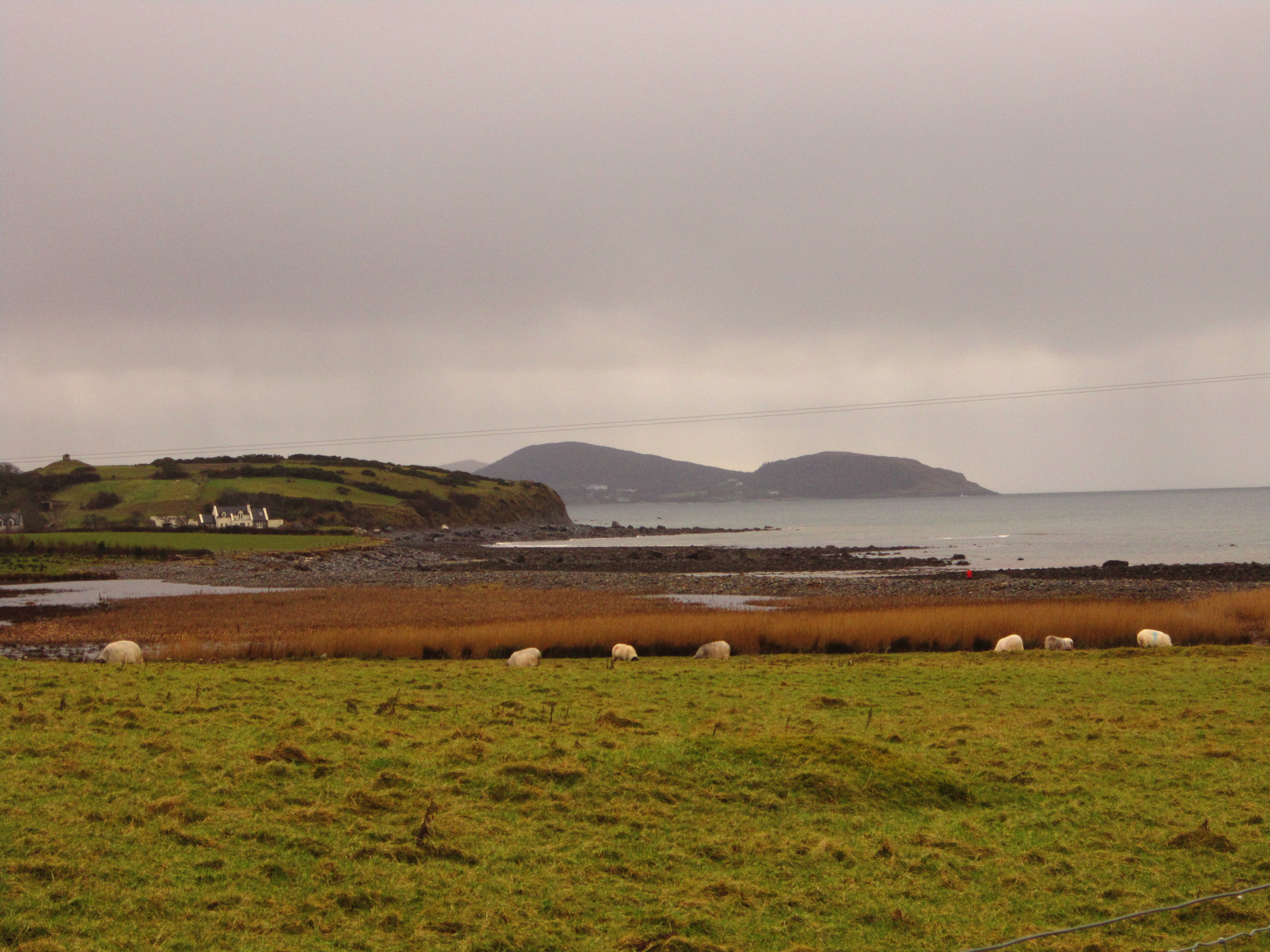
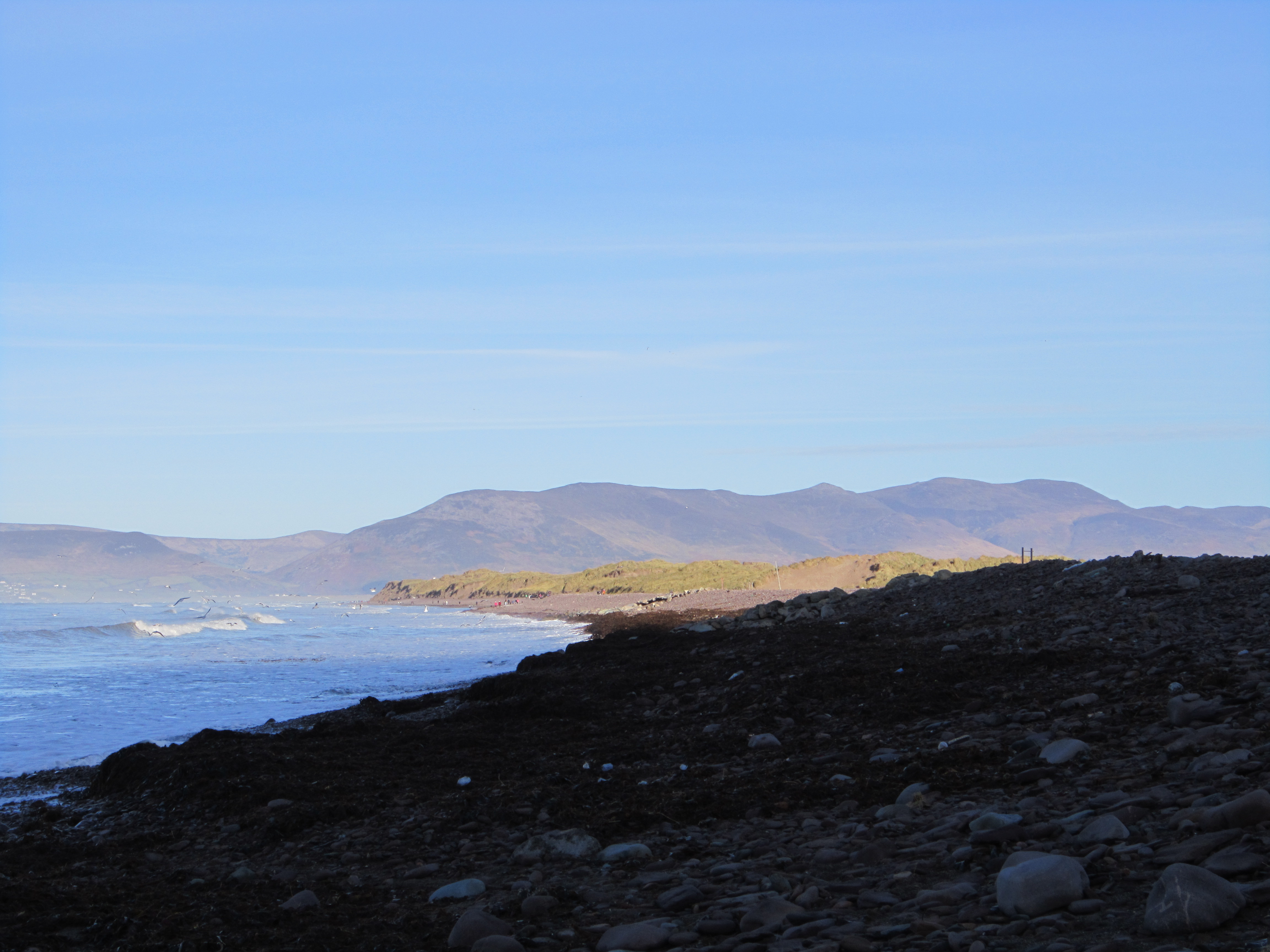
You often see photos of Ireland in all her emerald beauty. But for me, there is nothing more striking than the subtle colors of winter. This series of photos was taken in January  around the lake shore of Lough Carra, Co. Mayo, and along the coastline of counties Mayo and Kerry.

IMG_7545

IMG_7478

IMG_7566IMG_7486


IMG_7631

IMG_7539

IMG_7689

IMG_7496IMG_7487

IMG_7669

IMG_7676

IMG_7661

IMG_7567

IMG_7610

IMG_7609

IMG_7170

IMG_7216

IMG_7190

IMG_7203

IMG_7257

IMG_7156

IMG_7264

IMG_7294

IMG_7381

Early January evening on Lough Carra, Co Mayo

Early January evening on Lough Carra, Co Mayo

Early January evening on Lough Carra, Co Mayo


BARRED OWLS: FLYING LESSONS

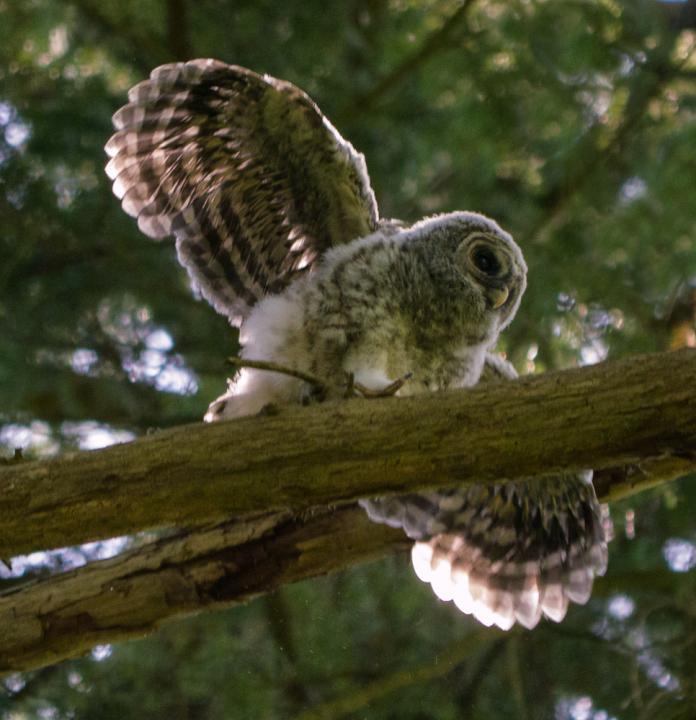
Barred Owl in Basking Ridge, NJ. Photo courtesy of Matt Zeitler, orangebirding.com

Barred Owl in Basking Ridge, NJ. Photo courtesy of Matt Zeitler, orangebirding.com

One early summer afternoon, I stepped out onto the deck to bring in a load of laundry. A movement in the dappled shade of the trees, not twenty feet away, caught my eye. I recognized the dark eyes and striped brown and beige plumage of a barred owl. I stood transfixed, hardly daring to breathe.

The owl called softly and, from a nearby branch, a smaller owl took off. The young owl made a short, swooping flight and landed somewhat clumsily by the adult. The birds seemed aware of my presence, but undeterred by it. For fifteen minutes, I stood and watched the owl parent teach its four owlets to fly, afraid of missing a moment by running inside for my camera.

I had often been woken in the night by the owls calling to each other in the woodland surrounding our house—the distinctive, throaty Who-cooks-for-you, who cooks for you-all? But this was the first time I’d seen one. The barred owl, sometimes called a hoot owl, striped, or wood owl, is primarily crepuscular—active at twilight. However, as I later read, daytime activity is not unusual when they’re raising chicks. Owls nest in tree cavities. The female lays between two and four eggs in April, and then sits for four weeks waiting for them to hatch. Once hatched, it takes another four or five weeks before they young are fledged. I could see that this owl had a lot of time and energy invested in her brood.

I’ve long had a fascination with owls. As a child, camping near the ancient ruins of a haunted Irish abbey, the protracted screech of a barn owl left me frozen with fear in my sleeping bag. Surely the sound was the ghost cry of the monks being murdered by the invading Vikings.

In the imagination, owls are mysterious creatures of darkness. If you’ve ever seen those pale wings swoop in front of your car headlights late at night, and those marble-round eyes staring at you, you know what I mean.

Maybe because of their nocturnal habits and all-knowing faces, tales of owls are deeply rooted in folklore and mythology. To this day, all over the world, they play a dual and often contradictory role—the harbingers of death and misfortune, but also the sign of wisdom and good luck. In Greek mythology, Athene, the Goddess of Wisdom, took the Little Owl as her symbol. In Aesop’s fables, the owl is a shrewd operator with the power to foretell the future. Owls appeared on early Greek coins and were seen as good omens, especially during times of war, and thus were protected.

When I was seven I lived on the Greek island of Corfu with my family. My sisters and I had a small scops owl as a bedroom companion. My father, a documentary filmmaker, who had hand-reared many sick and injured creatures, was recording its habits. Sadly, one day we returned to find its charred body lying in the back alley. It had fallen victim to superstitions that had superseded its protected status.

In Roman times, the owl represented the dark underworld. Witches could turn themselves into owls and suck the blood of infants. The hoot of an owl meant impending death. These beliefs spread with the Romans. In English folklore, a dead owl nailed to a barn door could ward off evil. And folk remedies made from burnt owl and owl eggs could cure everything from alcoholism to Whopping cough.

In Native American traditions, owls are also honored and reviled. To the Pawnee, the owl is the Chief of the Night, and as such, a protector. The Cherokee respect and covet its ability to see at night, but fear its call as an omen of death. Some tribes believe that owl feathers ward off evil and bring healing. Oglala Sioux warriors wear owl feathers to enhance bravery and vision. Yakama tribes of Washington State see the owl as a powerful totem to be consulted on how natural resources and forests should be used.

As I discovered, barred owls have adapted to life in proximity to humans. They don’t seem to mind suburban areas, and even thrive on the abundance of rodents to prey on. I thought my front row seat for the owl flying lessons was a unique show. Little did I know that I’d get a matinee performance the next afternoon, and the next, until those owlets were fully fledged.

AMC_120511_GH90588-new_face

DREAMING OF LANZAROTE

IMG_7471 IMG_7486 IMG_7483


Six grey ponies tearing at frost-rimed grass on the drive in.
Nephin sporting a capÍn of snow.
Swans, paired, trawling the lake’s inlets.
At the doctor’s office Martina still has her coat and scarf on
Furiously fielding phone calls and mumbled inquiries
From the queue shuffling through the dismal hallway.
In the waiting room two old fellas gab away, biding their time,
In it for the long haul.
And then two more.
Their Mayo dialect—laced with curses—
Rolls around their mouths as if they’re sucking boiled sweets.
It seems, to my untuned ear, to be a diatribe
Of every family in the county,
Or maybe just a friendly reminiscing.
Soon, all the chairs are taken
And still the patients stream in:
Bloodless, Vitamin D starved faces, rattling coughs, mini-germ factories,
Dreaming of Lanzarote.images-6

TOP TEN THINGS I’VE LEARED ABOUT BLOGGING

DSCF0773

Blogging is not for sissies. It takes time, focus, and hard work if you want to put out blogs that won’t make you cringe down the road. But the rewards are big. As the Write Eejit comes to the end of its first year, I thought it a good time to look back at what it’s taught me so far.

  1. Nobody just pops out a post worth its salt. Even the folks that seem to effortlessly come up with witty and informative things to say on a daily basis have more than likely been mulling them over for a while.   WHITE DEER
  2. It’s an excellent way to get a load off my chest. Feeling aggravated or ecstatic about something? Why not post a mini rant. So what if I’ll forever be known as that miserable woman who hates her cat. I HATE MY CAT
  3. Blogging has a way of bringing things into focus. Coming up with topics not only allows me to live in the moment, but also reflect on past events in a new light. GOLDEN MOMENTS
  4. I get to experiment without having to commit to a specific idea or format. PAGAN MOON
  5. I’ve rediscovered things about my past that had dropped off my radar. HIPPIE ADVENTURE
  6. On good days when I post without a hitch, blogging makes me feel like 21st century Warrior Woman. On bad days when I can’t figure out why my password has reset itself, I’m an FTD (frustrated tech dummy). OLD WRITERS NEW MEDIA
  7. Blogging forces me to set goals and shoot for a deadline, and is a constant reminder to adhere to good writing habits—check spelling and punctuation before hitting “Post”. COTTER PIN
  8. Blogging helps me take that breath and reevaluate where I am, both in life, and as a writer. MUD SEASON
  9. There are many talented and inspiring fellow bloggers out there. HIGH JINKS IN THE HAREM
  10. And when those “Likes” and comments pop up, boy is it instant gratification for someone who spends a lot of time tapping away in no-woman’s land. BLIND SQUIRREL PARENTING

Be More Zen

Photo by Wendy Idele, '93

Photo by Wendy Idele, ’93

If there’s a surface in my house
That doesn’t have a heap of things piled on it
I can’t find it.
Most of the time I can turn a blind eye—
90% of the time, I don’t give a crap.
But that other 10% is a doozy.
Suddenly all my lack of caring
Is condensed into one hard hairball of bothering.
I’m so bothered, in fact, by the chaos
That I dig out clippings from the local classifieds
Of people eager to dispatch my mess.
I’m on the verge of picking up the phone
When something stops me.
I read somewhere that creative types
Need chaos to thrive.
Well that’s my excuse.
My other argument goes something like this:
When I let go of my perception of chaos
I’m being very Zen,
And let’s face it, we all need to be more Zen.

SNOW–LOVE IT OR HATE IT?

IMG_3230It’s that time of year again; my halls are decked with dripping snow boots, pants, hats, and mittens. We’ve been frolicking in the fluffy stuff, building forts, packing snowballs, snapping snow scenes for holiday cards.

First out the door on a snow day is Dahlia, our resident snow cat. Ever since she was a kitten she’s loved the snow. Her mother, on the other hand, is happy to sit on the doorstep, soaking up the rays, but not setting paw anywhere near that disgusting cold, wet, white stuff. IMG_7319

Love it or hate it, we all fall somewhere on the snow spectrum. As a child I was way over to the left, under radically obsessed. The fact that we rarely ever got more than a mushy millimeter of snow in Ireland may have had something to do with it. Even a good frost classified as a “snowy” day. And then one year we got the mother of all snowfalls. It snowed for twenty-four hours straight, and by the end of it, the country was in total lock down, which lasted for weeks. I remember walking along snow banks with the tops of hedges poking out, and coming across cars buried in snow caves at the side of the road. My toddler brother owes his continued existence to his red snow suit. But for that, we’d have lost him, sunk up to his little uxters in a snowdrift. Needless to say, I was in heaven. IMG_2134

Now, living in the Northeast US, we get at least one good footer of a storm a year, and sometimes more. When the local forecasters go into hyperbolic mode about the massive storm barreling our way, I still feel that tingle of excitement. And even if I don’t always want to run out and make snow angels, I delight in the transformed landscape, and drink in the sharp tang of snowy air. IMG_0999

I believe I inherited my love of snow from my father. He never failed to get excited about a flake of snow, and often, when I call him up and tell him of our latest snowfall, he’ll express deep envy. My mother—not so much. She falls on the other end of the spectrum. Happy to look at a pristine landscape through a window, while snuggled up with a good book and a cup of tea, don’t ask her to step outside.

Where do you fall on the snow spectrum? Love it, hate it, or somewhere in between?

IMG_0296 IMG_3282

Greek Island Adventure, 5

Angeliki putting on her national costume with  Katerina & Yaya's help

Angeliki putting on her national costume with Katerina & Yaya’s help

In 1973 as a seven-year-old child living the idyllic life on the island of Corfu, I was oblivious to the fact that Greece was in turmoil, writhing under the yoke of the Army Junta (1968-74). My father later informed me that our special invitation to visit the Old Citadel for a feast day celebration, and several other rather bizarre invitations, was so that the secret police could keep tabs on us. I can only imagine that in their eyes, a couple of Irish documentary filmmakers with three small children in tow seemed highly subversive.

vlcsnap-2013-10-14-21h32m54s134

On the whole, though, the Corfiots welcomed us with open arms.  vlcsnap-2013-10-14-21h07m43s100


This is how a typical meeting with a stranger would go: Mum and Dad would stop the VW bus on a remote hillside to film a snake Dad had just caught. Out of nowhere, a goat herder or a group of small children would appear. Soon we’d be surrounded by curious faces. And then came the inevitable question. Poú eísai? Where are you from? When we said, Irlandía, initially thrown off by the blonde hair they would say, Ollandía? Ochi, we’d say, No. Irlandía. Their faces would light up in recognition. Their index fingers would go up and invariably they’d go, Boom, boom, boom, imitating the sound of a gun. At the time it was the height of The Troubles in Northern Ireland, with the IRA vehemently resisting the British Government’s occupation, and many in Greece understood that oppression. Immediately, we would become allies. Soon, we learned when asked that question to respond, Irlandía, Boom, boom, boom.

In our village, Junta, or no Junta, people got on with the job of living. And every day there was something new for my sisters and I to marvel at. Traveling trades people often made their way through the narrow streets of Kinopiastes, calling out their services. One of my favorites was the Spoon Man.

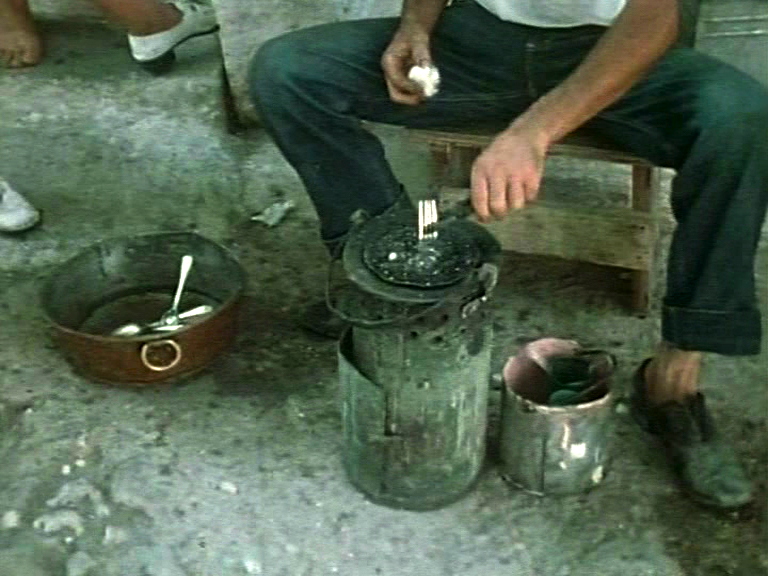
vlcsnap-2013-10-14-21h48m34s76At his familiar cry, doors would open and voices would hail him. He’d stop, open up his bag of tricks on the side of the street and a crowd of housewives would gather, bringing their household cutlery wrapped in their aprons. To a small child, the Spoon Man was better than a magician. Carefully holding a tarnished spoon with a pair of tongs, he’d dip it in a blackened, bubbling pot of sludgy, dull silver-hued liquid. A second later the spoon would emerge, gleaming and winking in the sunlight, it’s silver surface restored to glory.

Surely this was alchemy—or at least its little sister. vlcsnap-2013-10-14-21h48m21s165

The traveling peddler, was another of my favorites. Dimitris led his heavily laden donkey, panniers piled high with every imaginable household tool, to our back gate. He’d stop, spread out the choicest selection of combs and headscarves and plastic bowls on a cloth, and wait for customers. Then, sales or no sales, he’d load everything back onto the patient donkey, tie it down securely, and clatter off into the distance, plastic buckets swaying from side to side.vlcsnap-2013-10-14-21h53m33s233

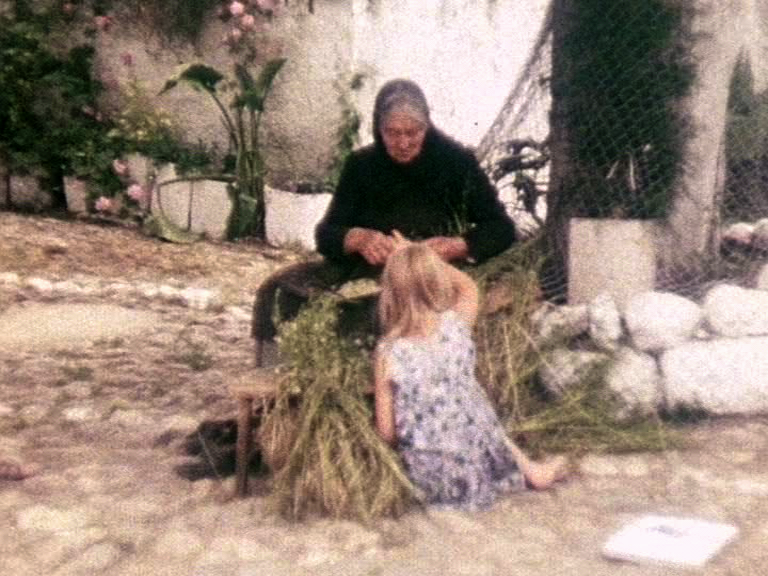
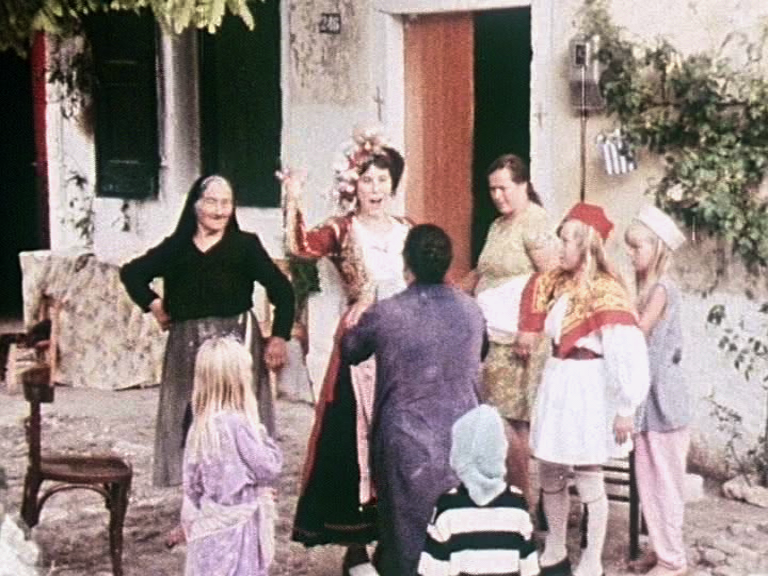
I often wonder how the villagers perceived this Irish family who landed in their midst that spring and summer. They put up with our perpetual curiosity and even seemed to welcome our interest in every aspect of their lives. If my sisters and I ran down to Pappoú’s corner shop to buy a gazoza or some bubble gum, not only would we return with our money still in our pockets, but countless grandmothers sitting on their stoops, or grandfathers flicking worry beads through their fingers would have greeted us. Our friends sought us out, and arm in arm, we paraded around the village until we found some mischief to get into. One day Leni borrowed her mother’s wedding dress and we held an epic Greek wedding in the yard. Another day, Leni and her older sister Angeliki dressed up in their national costumes to give us a show.

vlcsnap-2013-10-14-21h39m10s30 vlcsnap-2013-10-14-21h36m38s63

The nuns who lived up the hill at the back of the village seemed delighted by our visits. Giggling and chattering away like jackdaws, the young nuns immediately pulled out extra chairs and a big bottle of ouzo and the ubiquitous, sticky kumquat liqueur. Thankfully, this was off limits to kids. But my mother would dutifully take tiny sips of the sickly sweet liqueur. They’d crack walnuts from their trees for us, and offer chunks of nougat.

Occasionally, we did run into a cultural misunderstanding. Since a small boy, my father has hand-raised stray or injured animals, particularly birds. The best pet we ever had was a Jackdaw named Percival that Dad helped us hand-rear after it fell out of it’s nest. We hadn’t been living in Greece long before he acquired a young Little Owl. The plan was to keep it long enough to film it, then release it. During the day it slept in the villa, perched on my father’s tripod. At night, it woke up to eat the live mice we’d caught for it and flutter around the house. One day, we came back from a day of filming and the owl was gone. Later, we found its burnt remains in the alleyway at the back of the house. We learnt that in Greece, old superstitions run deep, and a few people still consider them kakó, or evil. Perhaps this dates back to the ancient Roman belief that owls were harbingers of death, or witches could turn themselves into owls. For most in Greece, though, the owl is seen as a bird of wisdom. In Greek mythology, the owl was the favorite bird of Athene, the Greek Goddess of Wisdom, and appears on early Greek coins.

Sadly our sojourn on Corfu finally came to an end. Gathered around the stone table under the grapevines, we had one last party with the Gardigotti family who had made us feel like we truly belonged. With the record player set in the window, everyone danced around the yard. And one last time we chased fireflies with our new friends. Then it was time to start our long drive home, this time through Macedonia and Yugoslavia, bringing tortoises and olive oil and memories to last a lifetime.

Ygeía sas!

Ygeía sas!

vlcsnap-2013-10-14-21h45m14s125

 Post script: We did return when I was sixteen, this time, sharing our adventures with my four-year-old brother. Although things had changed, I’m glad to say much of the Greek island magic was still there.

Corfu Adventure, Part 4

images-4

When my family and I arrived on Corfu in 1973, we were part of a long line of blow-ins. For a small island, it has a blockbuster of a history, and not surprisingly, features in Greek mythology. Homer’s hero, Odysseus, washed up on it’s shores after being shipwrecked. It’s strategic location between the Adriatic and the Ionian seas made it a great location for trade and an excellent naval base, and it’s turbulent history reflects that. The Corinthians founded the ancient city of Kerkyra around 734 B.C.E., while many others over the millennia, sought to exploit the island including the Romans, Goths, Venetians, French, and British. Interested to read more- http://www.greecetravel.com/corfu/history.html

My sisters and I were lucky enough to see, first hand, evidence of Corfu’s earliest settlers. With Dr. Augustus Sordinas, an expert on Corfu’s early human inhabitants, we explored the cave where he excavated the bones of wild cattle, deer, and hyenas, and flint tools dating from the Paleolithic period, about 25,000 years ago.

images-3

At Sidari in the north of the island we were not the first to camp by a small river leading down to the sea. In the sandy cliff face we studied the layers of fossilized shells left over from Stone Age clambakes, and shards of flint, chipped into workable tools. I still treasure the finely worked flint spear tip I found poking out of the mud. We visited a man who lived in a remote coastal area. His home was built from marsh reeds, and inside, his bed was a raised pallet of earth. We watched in awe as he caught his dinner of sardines using a net weighted down with rocks that he cast into the shallow bay. He then offered Mum and Dad wine made from his own foot-crushed grapes. His lifestyle had probably changed little from that of his ancestors, hundreds, if not thousands, of years ago.

Some of the strongest memories of living on Corfu revolve around food. At first, my seven-year-old palate craved cornflakes and peanut butter, a throwback to home. I soon saw the light, and a pan full of fresh-caught sardines, fried to a crisp in olive oil was a treat—eyeballs and all. I even came to like the chewy texture of octopus.

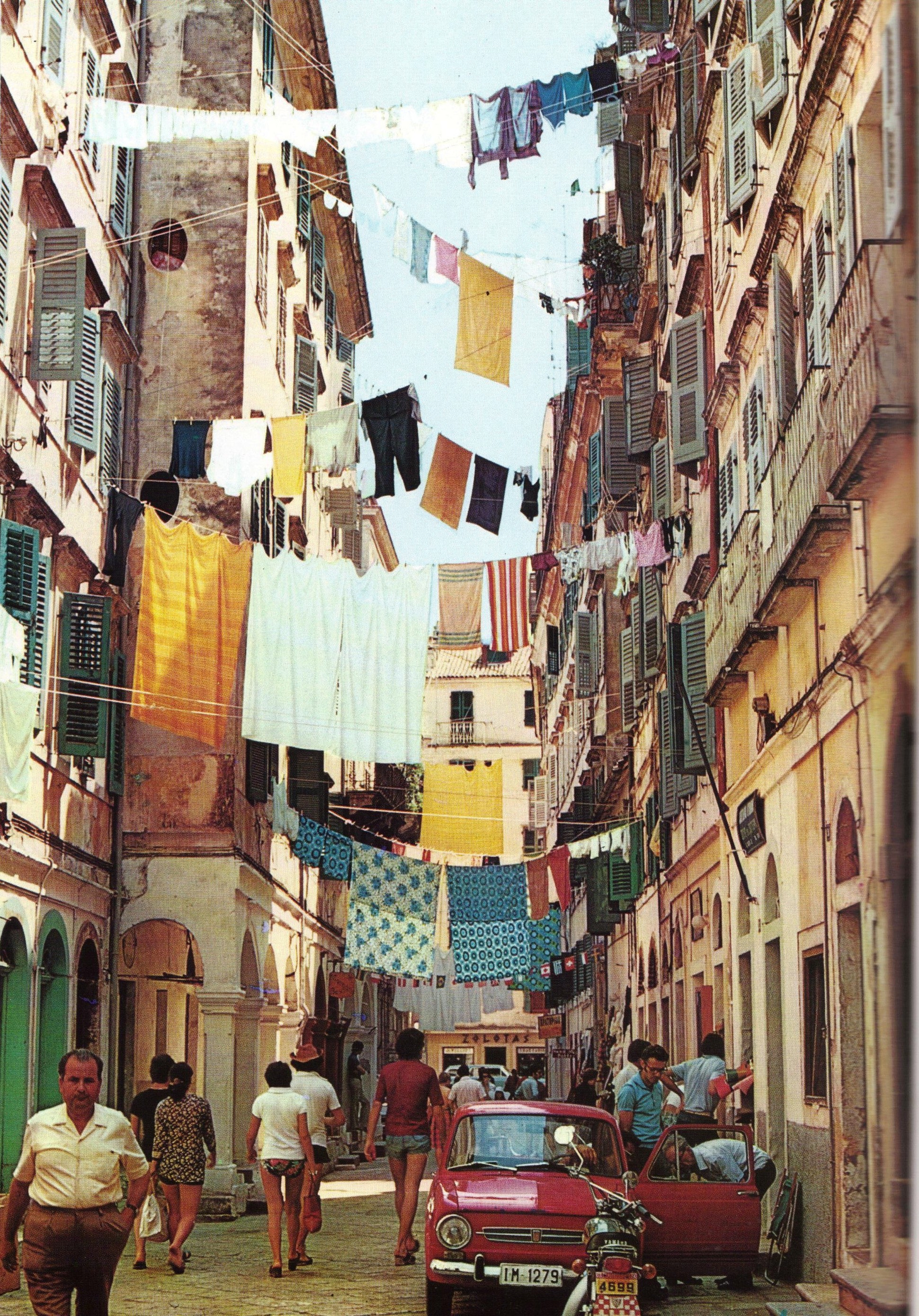
Our favorite place to eat was on an unprepossessing backstreet in Corfu’s main town, Kerkyra. The tiny neighborhood restaurant had two tables outside and the same number inside. Grilled lamb kebabs, Greek salad fragrant with oregano and olive oil, and slivered potato fries—that’s all they made, but that’s all they needed to make. Afterwards we wended our way through the labyrinth of narrow, cobblestone streets of the old town, little changed since the Venetians laid them out five hundred years earlier.

vlcsnap-2013-10-14-21h12m37s220 005-3 vlcsnap-2013-10-14-21h30m39s76

At Spianada square, overlooked by the ancient Citadel and moat (also courtesy of the Venetians), we joined in the passeo of Corfiots strolling along the esplanade flanked by its arched colonnade filled with cafes and restaurants. Sometimes we’d sit and enjoy a bottle of the local ginger beer, or lick ice cream and listen to the brass band playing in the bandstand. On Sunday afternoons, we watched the strange sight of cricket being played, a reminder that Corfu was a British colony in the 19th century. On our way home, we had to stop at a tiny dairy shop for a dessert treat. They served the most delicious, cinnamon-topped rice pudding. As soon as Easter was over and the restrictions of Lent, they switched to serving equally wonderful rich, creamy goats milk yogurt.

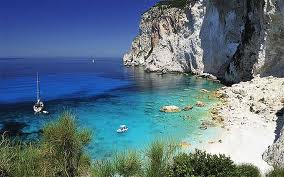
Another one of our greatest pleasures on Corfu was swimming. In addition to the small tourist beaches, surrounded by hotels, there were plenty of remote swathes of sand with only seabird footprints. Mum and Dad kitted us out with snorkels and flippers and we entertained ourselves for hours while Dad fiddled with his leaky underwater camera. Tourists would sit up and gawk as three small, blonde children swam in, often from half a mile or more offshore, and trouped out of the water like ducklings.

vlcsnap-2013-10-14-21h14m35s136 images

Some of the best beaches for snorkeling were the rocky coves reached by a steep cliff path. The water was crystal clear and teeming with life. After a morning of swimming, we’d picnic in the olive groves: hunks of fresh bread doused in musky, green olive oil and topped with slabs of salty feta and slices of sweet tomato, and a handful of pungent little olives. Desert might be a juicy peach, or a square of sweet halvah made from crushed sesame seeds and honey. Heaven!

When it came time for my 8th birthday in the middle of July, I knew exactly what I wanted—a watermelon. I had fantasized about that watermelon for months, keeping my eye out for it every time we went to the market. The Irish climate precluded growing anything more exciting than cabbage, potatoes, and the rare zucchini in the early 70s, so this would be a first. On the morning of my birthday, my excitement knew no bounds at the sight of that huge, dark green globe. I carried it around the neighborhood showing it off to all my friends. Just as I staggered home with it, my arms gave out. Splat! It landed on the cobblestones in a pink, mushy mess. I was heartbroken—until Mum took me down the village to the watermelon man and I picked out another from his huge pyramid of ripe fruit.

To this day, nothing says summer and Greece and birthday quite like a slice of sweet, crisp watermelon.

Fifth & final installment coming soon


Greek Island Adventure, Part 3

Corfu_tcm5-3908

Have you ever daydreamed about something, and then that daydream came true? When I was seven years old, that happened to me.

It all started one grey, rainy January day on a family walk in Ireland, the country where I grew up. As my sisters and I splashed through muddy puddles, Mum and Dad said to us, “How would you like to go and live on the Greek island of Corfu?” The first picture that popped into my head was of a deep blue sky, a dusty white road, and an orange tree, heavy with fruit. In my daydream, I reached up on tippy-toe and picked one of those warm, juicy oranges. I couldn’t imagine anything more magical.

oranges-52

In early April shortly after our arrival on Corfu, as we explored the island in our red VW van, we stopped on a deserted country road. Coming over the brow of a hill, I looked up and there, against the blue sky, were my sun-warmed fruit. The smell and taste of a fresh orange is a memory dart that will always recall that moment.

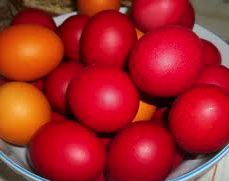
Spring was a busy time in the village of Kinopiastes. Everyone was cleaning and whitewashing their houses and streets for Orthodox Easter. This was nothing like Easter back home, and my sisters and I were eager to see everything. Instead of stores filled with chocolate eggs, we soon added a new word to our expanding vocabulary, kokkina avga. These were dyed red hen’s eggs. At the time, our Greek didn’t run to the explanation of their symbolism of the blood of Christ and the renewal of life. But we got that they were special. They were even baked into an Easter sweet bread.

vlcsnap-2013-10-14-21h22m25s252 images

When the day came for the family we lived with to butcher the lamb for the Easter feast, we watched the gory details with fascination. The lamb was strung up and its throat slit, before being skinned and disemboweled. The blood was smeared in the shape of a cross on the fresh whitewash around the front door of the house. When the Easter procession passed through our cobblestone yard, led by Straggly Beard the village priest, we leaned out the bedroom window to watch. And then we ran outside to join our friends following the flower bedecked icon of Christ, carrying special white Easter candles. The narrow streets were lined with people, holding their lit candles and waiting for the procession, which would eventually wind it’s way back to the church.

On Holy Saturday, we were allowed stay up extra late to attend the special ceremony in Kekira, the main town. We could feel the excitement building all around us as we stood waiting in the dark. Finally, the priest held up the eternal flame and announced, Christos Anesti—Christ is Risen. All hell broke loose: bells tolled, guns saluted, and to our delight, fireworks exploded in the sky, illuminating the fort above the town. Soon a sea of well-wishers and flickering candlelight surrounded us.images-2

There is nothing like the smell and taste of lamb, slow grilled on a spit of charcoal. The Easter feast, like so many of the saint’s days and special occasions on Corfu, was a wonderful excuse for everyone to party. And of course that meant great food, and drink, and dancing. Grown ups sipped ouzo and retsina and laughed and joked. We were even allowed to have some watered down wine, though we preferred Gazoza, the local fizzy beverage. The village kids introduced us to a new game they played with the special red eggs. The aim of it was to crack your opponent’s egg without cracking your own.

Spring turned into early summer. The pace of life on Corfu took some getting used to. People rose early and headed out to work the fields before it got too hot. If you had shopping to do, you did it in the morning at the open air markets, or the bakery, haberdashery, and grocery stores. After lunch shutters were closed and shop doors bolted as everyone went for their siesta. vlcsnap-2013-10-14-22h17m04s10For a child, this was both the most frustrating and most wonderful time of day. How could grown-ups possibly sleep when it was hot and prickly under the sheets and the cicadas were making an ungodly racket in the walnut tree? Ah, but you could tiptoe outside and sit on the cool stone steps and watch the tiny lizards that ran up and down. You could go and steal a peach from the tree in the yard and eat it with the juice running all the way down to your elbows. You could explore the old cemetery and pick bunches of wild, magenta roses. And there was always the cooling relief of the village pump. Not everyone slept. Many of the older men—probably because they didn’t work nearly as hard as the women—preferred to sit in the shade and play backgammon or dominoes. I can still remember the sound of the click of the tiles and the tumble of the dice. And then, like the castle in the Grimm brother’s Sleeping Beauty, slowly the village would come back to life as evening came.

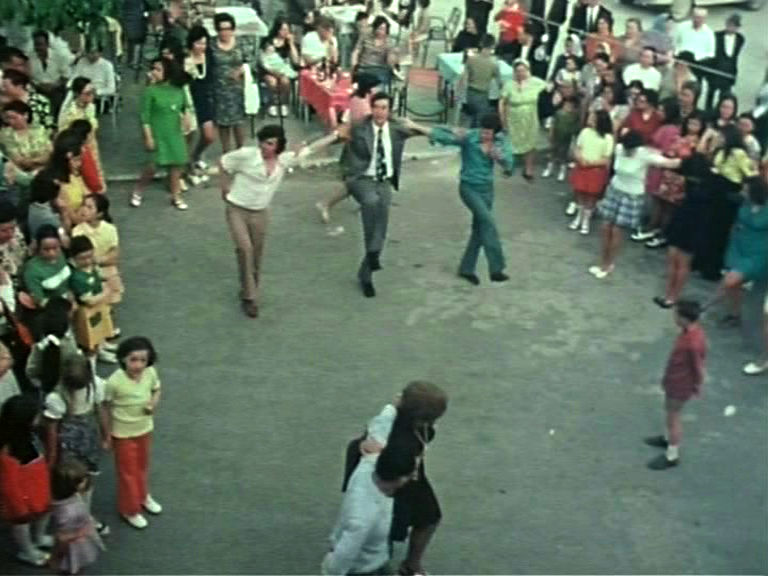
The village square was a nightly focal point for young and old. On weeknights, people brought chairs and gathered to watch episodes of the wildly popular General Hospital. Passeo started after dinner when the villagers came out to walk and talk. Arm and arm with our friends, we’d wander the streets sucking on ice pops and taking in the sights. Older folks would sit, gossiping, while groups of teenager girls and boys giggled and flirted under the watchful eyes of the grannies. We were amazed to discover that many of our playmates would be married by the time they turned sixteen. On weekends and special occasions, speakers were set up around the square and there was traditional Greek dancing. Eleni delighted in showing us the steps, and, arms laced around each other’s shoulders, we joined in the fun.vlcsnap-2013-10-14-21h24m12s14

We soon learned that children were considered the lifeblood of the village. New babies were carried around for everyone to admire. And chubby toddlers were considered fair game for squeezes and tickles from grandfathers to school kids alike. We couldn’t walk the streets without being hugged and pinched. In a small village everyone shares the daily joys and sorrows. During our time in Kinopiastes we were lucky enough to see a wedding, thrilled at the sight of grown-ups smashing plates on the ground, and a baptism where the naked baby was dunked under the water and came up dripping and squealing. Sadly, we also witnessed the communal grief when a young man was killed in a motorcycle accident. Over night his young wife joined the ranks of the black-garbed widows, clothes she would wear for the next seven years. But in that close-knit village we knew that she and her toddler son would never be alone with her grief.

When we had first visited, my sisters and I had been horrified by the hordes of curious people who had turned out to see the unusual sight of an Irish family invading their village. However, I will always be grateful to my parents for making the decision to live there, and to the community itself for embracing us and sharing their lives with us. It was a truly formative experience for a young child.                                                                 To be continued.

vlcsnap-2013-10-14-21h00m37s218